Physical Address
304 North Cardinal St.
Dorchester Center, MA 02124
Physical Address
304 North Cardinal St.
Dorchester Center, MA 02124

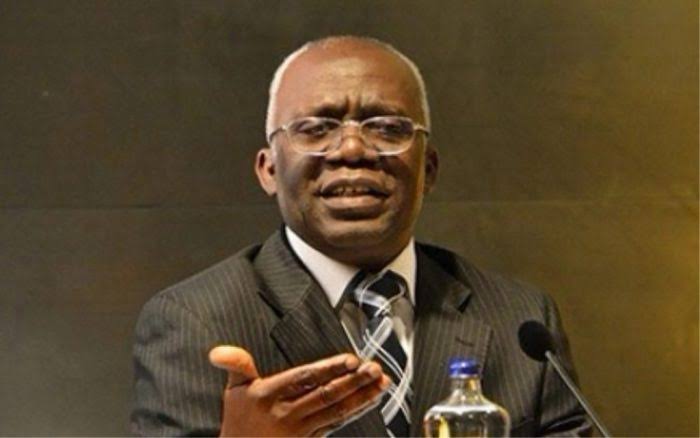
Human rights lawyer and Senior Advocate of Nigeria (SAN), Femi Falana, has criticised the Federal Government’s decision to provide houses for judges, describing the policy as discriminatory, illegal and contrary to the constitutional principle of equality before the law.
Falana said although judicial officers deserve decent accommodation and adequate security to discharge their responsibilities effectively, extending such benefits solely to judges while neglecting other public servants amounts to unequal treatment.
Speaking at a public event, the senior lawyer said Nigeria must begin to challenge what he described as special privileges enjoyed by top public officials and the wealthy.
“We have got to a stage in this country where we need to challenge the special privileges given to the rich and top public officers in the country,” he said.
“Yesterday, I was watching the TV. I was very sad when I saw that the Federal Government was handing over keys of houses to judges, and I asked myself, under what law are we operating because it is discriminatory and illegal.”
Falana maintained that judges are entitled to decent housing and security because of the nature of their work, but insisted that similar consideration should be extended to other citizens serving the nation.
“You must treat equals equal in our country, so you can’t take out judges. Judges are entitled to accommodation, by the way. They must live comfortably and they must be well secured, but other citizens must be equally provided for,” he said.
“If you don’t do it, you can be challenged and that is going to happen very soon because what is good for the goose is good for the gander.”
He cited university lecturers as an example of professionals whose welfare has been neglected despite their contributions to national development.
“If you have a professor who also has to render services to society and those professors are not paid well, nobody talks of providing houses for them now. They were living in rented quarters. These days, there are not enough quarters for them, so we must also look at that,” he said.
The senior advocate also criticised the benefits enjoyed by former governors now serving in the National Assembly, arguing that such privileges stand in sharp contrast to the treatment of career civil servants.
“If former governors in the National Assembly, about 21 of them, are taking salaries from the National Assembly and jumbo allowances and they are also entitled to a house in the state where they governed for four or eight years and another house in Abuja, while a civil servant who has worked for 35 years simply retires at the end of the day, then we must insist that equality before the law in our country is respected,” he said.
Falana warned that any government policy that grants exclusive benefits to a select group of public officials at the expense of others could be challenged in court.
His comments followed Wednesday’s announcement by the Minister of the Federal Capital Territory (FCT), Nyesom Wike, that the newly completed residential quarters for judges of the FCT High Court would be allocated on an owner-occupier basis, subject to the approval of President Bola Tinubu and the Attorney General of the Federation, Lateef Fagbemi (SAN).
Wike made the announcement during the inauguration of 20 residential units built for FCT High Court judges in Katampe, Abuja, as part of projects marking President Tinubu’s third year in office.
The minister also disclosed plans to construct additional courtrooms and more residential accommodation for judges to strengthen judicial infrastructure in the Federal Capital Territory.
The housing initiative has, however, attracted criticism from some stakeholders.
Socio-accountability organisation MonITNG accused the FCT Administration of prioritising housing for judges while many residents of Abuja’s satellite communities continue to lack access to essential services such as clean water, quality education and healthcare.
The organisation argued that the decision raises questions about the administration’s spending priorities, given the pressing needs of underserved communities across the territory.
Join us on our WhatsApp Platform @KOIKIMEDIA NEWS YOUR PAGE
koikimedia Bringing the World 🌎 Closer to Your Doorstep

[mc4wp_form id=2402]