Physical Address
304 North Cardinal St.
Dorchester Center, MA 02124
Physical Address
304 North Cardinal St.
Dorchester Center, MA 02124

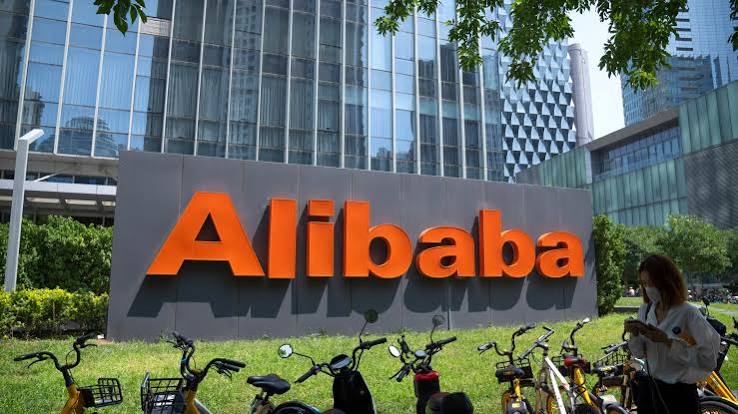
Chinese technology giant Alibaba Group on Tuesday announced plans to develop a new artificial intelligence model with between 5 trillion and 10 trillion parameters and unveiled a next-generation AI chip as it expands investments across the technology sector.
The announcements were made at Alibaba Cloud’s annual Apsara Conference in Hangzhou and sent Alibaba’s Hong Kong-listed shares up 5.1 per cent, taking them to their highest level in about a month.
Alibaba said its Qwen artificial intelligence team was working on increasingly powerful models designed to handle more complex tasks requiring longer periods of reasoning and planning.
The company said it is currently training Qwen 4, while future models, including Qwen 4.5 and Qwen 5, are expected to scale to between 5 trillion and 10 trillion parameters.
Alibaba’s current flagship model, Qwen 3.8 Max, has about 2.4 trillion parameters. Parameters are one measure of the size of an AI model and the amount of information it can process and learn from.
Alibaba Chief Executive Officer Eddie Wu said the company was pursuing the development of artificial superintelligence, referring to AI systems capable of eventually exceeding human capabilities.
Wu also said Alibaba’s Qwen team had made progress in developing AI models capable of identifying their own weaknesses, conducting experiments and generating training data with limited human involvement.
Alibaba Unveils New AI Chip.
At the conference, Alibaba also introduced the Zhenwu V900, a new AI processor developed by its T-Head semiconductor unit.
Wu said the processor delivers about three times the performance of its predecessor, the M890, and can be connected in clusters of up to 500,000 chips to support the training and operation of large AI models.
The company said the Zhenwu V900 is expected to enter mass production and commercial release in the first quarter of 2027.
Wu said Alibaba expected significant growth in annual shipments of its AI chips as demand for computing power continues to rise.
The chip launch comes as Chinese technology companies accelerate efforts to develop domestic alternatives to advanced AI processors supplied by US chipmaker Nvidia.
Washington has imposed tighter export restrictions on advanced semiconductor technology to China, prompting Chinese companies to invest more heavily in locally developed chips and computing infrastructure.
Data Centre Capacity to Expand
Alibaba is also planning a major expansion of its data centre infrastructure to support the growing demand for artificial intelligence and cloud computing services.
Wu said Alibaba Cloud’s global data centre capacity is expected to exceed 20 gigawatts by 2032.
He said customer demand for AI services was exceptionally strong and was helping to accelerate revenue growth at Alibaba Cloud.
However, he acknowledged that supply chain constraints were limiting the speed at which the company could expand its infrastructure.
Alibaba said it would begin bringing its AI supernodes online at commercial scale during the current quarter as it seeks to increase computing capacity for customers developing and deploying AI applications.
Wu said medium- and long-term demand for computing capacity across the AI industry was significantly higher than the supply currently available.
The company is therefore investing across several parts of the AI supply chain, including foundation models, semiconductor technology, cloud computing and data centres.
Intensifying AI Competition
Alibaba’s latest announcements highlight the growing competition among Chinese technology companies to develop advanced AI systems and reduce reliance on foreign technology.
The company is seeking to build an integrated AI ecosystem in which its own models, chips and cloud infrastructure can work together to support large-scale AI development.
Wu described the development of advanced AI as the beginning of a technological era comparable to the Industrial Revolution.
He also said machines could
eventually develop far greater collective “thinking” capacity than humans.
He compared AI-powered coding with the early use of electricity, describing it as an important early application rather than necessarily the most significant breakthrough that AI could eventually produce.
Alibaba’s latest moves come as the company and other Chinese technology firms increase investment in AI amid strong demand for computing power and continued restrictions on access to some advanced foreign-made chips.
The company’s shares rose sharply following the announcements, reflecting the market’s response to its plans for larger AI models, new semiconductor technology and expanded cloud infrastructure.
Join us on our WhatsApp Platform @KOIKIMEDIA NEWS YOUR PAGE
Koikimedia Bringing the World 🌎 Closer to Your Doorstep

[mc4wp_form id=2402]