Physical Address
304 North Cardinal St.
Dorchester Center, MA 02124
Physical Address
304 North Cardinal St.
Dorchester Center, MA 02124

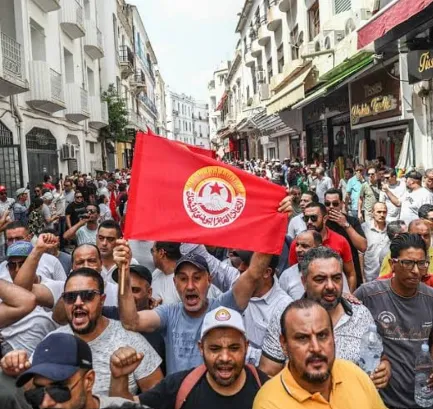
Hundreds of demonstrators have taken to the streets of Tunisia’s capital, Tunis, for a second consecutive month, demanding the resignation of President Kais Saied and the restoration of democratic rule.
The protesters marched on Thursday, expressing opposition to what they described as “one-man rule” and warning that the country was moving towards dictatorship.
They also called for the release of opposition politicians, activists and journalists who have been imprisoned.
The latest demonstration follows a similar protest held on July 25, which coincided with the anniversary of Saied’s decision in 2021 to dismiss the government and suspend parliament.
He later expanded his control by ruling through decrees before dissolving parliament in 2022.
Activist Wissem Sghaier, who took part in Thursday’s protest, said Tunisia was experiencing a severe deterioration across different areas of national life.
The demonstrations come as Tunisians face growing economic difficulties and rising pressure on household finances. Public services have deteriorated, while shortages of some essential goods and medicines have added to public frustration.
According to the World Bank, Tunisia’s inflation rate currently stands at 5.2 percent.
Investment has also declined significantly, while the government has introduced several measures aimed at reducing spending, including restrictions on public-sector recruitment and cuts in imports.
Economic and social grievances have increasingly fueled protests in different parts of the country.
Residents have demonstrated over frequent water and electricity disruptions, environmental concerns and other problems affecting their daily lives.
The protests indicate that public dissatisfaction is no longer focused solely on Saied’s political decisions, but is increasingly linked to the broader economic hardship facing ordinary Tunisians.
Rights organisations have also accused Saied’s administration of conducting a wide-ranging crackdown against political opponents, journalists, activists and independent civil society organisations.
Who Is Kais Saied?
Saied, a 68-year-old independent politician and former constitutional law professor, was elected president in 2019 after campaigning on a platform focused heavily on fighting corruption and reforming Tunisia’s political system.
He previously served as one of the legal advisers involved in drafting Tunisia’s 2014 constitution, which was widely regarded as a major achievement following the country’s 2011 revolution.
However, after taking office, Saied increasingly challenged the political system established by the constitution.
His decision to suspend parliament and dismiss the government in 2021 marked a major turning point in the country’s political trajectory.
Since then, Saied has introduced sweeping changes that have concentrated significant powers in the presidency.
His government has also faced criticism over judicial reforms that increased presidential influence over the courts, as well as prosecutions and mass trials involving political opponents.
With economic difficulties deepening and political tensions remaining high, the latest protests suggest that opposition to Saied’s rule continues to grow among sections of the Tunisian population.
Join us on our WhatsApp Platform @KOIKIMEDIA NEWS YOUR PAGE
koikimedia Bringing the World 🌎 Closer to Your Doorstep

[mc4wp_form id=2402]