Physical Address
304 North Cardinal St.
Dorchester Center, MA 02124
Physical Address
304 North Cardinal St.
Dorchester Center, MA 02124

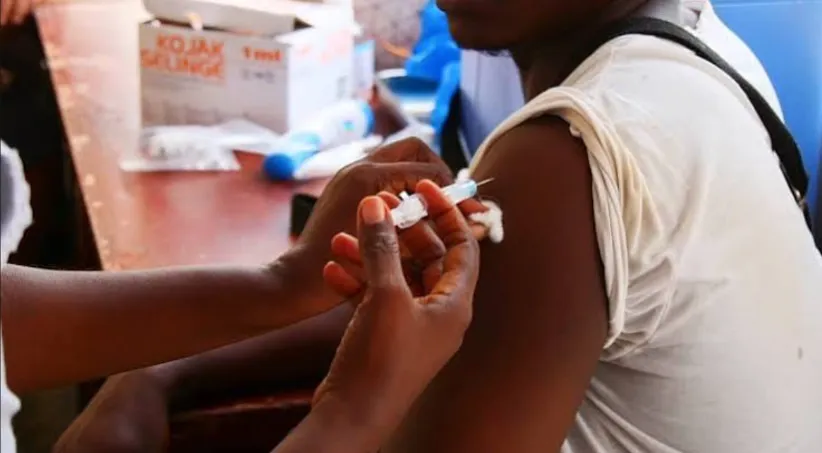
The Democratic Republic of the Congo (DRC) has received 16,250 doses of the Ervebo Ebola vaccine as health authorities and international organisations step up efforts to contain a rapidly worsening Ebola outbreak that has become the deadliest in the country’s history.
The vaccines arrived in the capital, Kinshasa, late on Friday and form the first batch of 70,000 doses that the World Health Organization (WHO) and its partners have committed to sending to the country.
More doses are expected to arrive next week as the government expands its response to the outbreak.
The Ebola outbreak has already claimed more than 2,500 lives out of nearly 5,300 confirmed cases.
The United Nations has warned that the virus is continuing to spread at an “exponential” rate, raising concerns that the number of infections and deaths could increase significantly if containment efforts are not strengthened.
Ervebo is approved for protection against the Zaire strain of Ebola. However, the strain currently circulating in the DRC is Bundibugyo, for which there is no approved vaccine or specific treatment.
The WHO said preliminary results from animal studies indicate that Ervebo may offer some protection against the strain, prompting plans to use part of the shipment in a clinical trial.
DRC Health Minister Samuel Roger Kamba said the country had previous experience using Ervebo, including during the major Ebola outbreak between 2018 and 2020, when the vaccine was administered on a large scale.
According to the WHO, 20,000 of the 70,000 doses allocated to the DRC will be used in a late-stage clinical trial designed to determine how effective the vaccine is against the Bundibugyo strain.
The remaining doses will primarily be administered to frontline workers, healthcare personnel and others considered to be at high risk of exposure.
Although the current outbreak was officially declared in mid-May, health authorities believe the virus had already been spreading for several weeks before it was detected.
Data from the Africa Centres for Disease Control and Prevention suggests that transmission has not yet reached its peak and could potentially rise to three times the rate currently being recorded.
The response is also facing serious challenges in eastern DRC, where ongoing armed conflict, limited healthcare infrastructure and delays in identifying infected people are making it more difficult to track and isolate cases.
Health officials are therefore combining vaccination with disease surveillance, contact tracing, infection prevention and public awareness campaigns in an effort to slow transmission.
International health agencies have urged authorities to accelerate these measures as the number of infections continues to rise.
With thousands of people already affected, health experts warn that rapid detection, vaccination and access to appropriate medical care will be crucial in preventing the outbreak from spreading further and causing even greater loss of life.
Join us on our WhatsApp Platform @KOIKIMEDIA NEWS YOUR PAGE
koikimedia Bringing the World 🌎 Closer to Your Doorstep

[mc4wp_form id=2402]