Physical Address
304 North Cardinal St.
Dorchester Center, MA 02124
Physical Address
304 North Cardinal St.
Dorchester Center, MA 02124

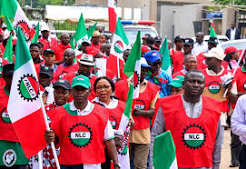
The Nigeria Labour Congress, NLC, has backed the demand by public sector workers for a reduction in the price of petrol to N500 per litre and an increase in the national minimum wage to N500,000 monthly.
The Joint National Public Service Negotiating Council, Trade Union Side, made the demands in a letter addressed to President Bola Tinubu, citing the worsening cost-of-living crisis and the impact of rising fuel prices on workers and their families.
The council also called for the immediate establishment of a committee to begin negotiations for a new national minimum wage ahead of January 2027.
The workers gave the Federal Government until Wednesday, September 30, 2026, to respond to their demands, warning that the continued deterioration in living conditions was creating growing tension among workers and Nigerians.
The JNPSNC comprises several public-sector unions, including the Nigerian Civil Service Union, Medical and Health Workers Union, Association of Senior Civil Servants of Nigeria, and National Association of Nigerian Nurses and Midwives.
Other unions represented on the council include the Amalgamated Union of Public Corporations, Civil Service Technical and Recreational Employees, Nigeria Union of Public Service, Reportorial, Secretarial, Data Processors and Allied Workers, National Union of Printing, Publishing and Paper Products Workers, and National Union of Agriculture and Allied Employees.
The unions said the removal of petrol subsidy had contributed significantly to the sharp rise in fuel prices and triggered increases in the cost of essential goods and services.
They argued that the recent increase in petrol prices to about N1,430 per litre or higher in some areas had further weakened workers’ purchasing power and made everyday life increasingly difficult.
According to the council, the distribution of food items and other palliatives was not a sustainable response to the economic crisis.
Instead, it urged the government to introduce measures capable of benefiting Nigerians broadly, particularly through a reduction in the cost of petrol.
The workers proposed that petrol should be made available at approximately N500 per litre, arguing that a lower pump price would have a wider impact on transportation, food prices and other sectors of the economy.
The council also called on the government to establish an intervention fund for stakeholders in the petroleum sector as part of efforts to stabilise fuel prices.
It suggested that the government could use a different description for such an intervention if it did not want to refer to it as a fuel subsidy.
Labour Seeks Intervention in Fuel Crisis
The JNPSNC also endorsed positions previously attributed to NLC President Joe Ajaero on addressing the rising cost of petrol.
Ajaero had argued that Nigeria, as an oil-producing country, should have mechanisms to protect citizens from international oil price fluctuations.
The NLC position cited by the council included calls for the government to sell crude oil in naira to local refineries, expand national petroleum storage capacity and strengthen the country’s ability to respond to energy emergencies.
The labour body argued that such measures could help create jobs, increase economic value and address some security challenges associated with economic hardship.
It also maintained that government intervention to cushion the effect of rising fuel prices was justified, particularly during periods of severe economic pressure.
The council further questioned the continued importation of crude oil by some local refineries, describing the situation as inconsistent with the objective of developing domestic refining capacity.
Workers Demand N500,000 Minimum Wage
On wages, the public service unions called for an immediate wage award for federal, state and local government workers.
They also demanded an upward review of salaries and allowances for public servants to reflect the rising cost of living.
Under the proposed 2027 salary structure, the council wants the minimum salary for an officer on Grade Level 01, Step 1, to be increased to N500,000 per month.
The unions also called for harmonised wages across ministries, departments and agencies and urged state and local governments to review the salaries of their workers accordingly.
The council asked President Tinubu to direct the National Salaries, Incomes and Wages Commission to commence negotiations with the NLC, Trade Union Congress of Nigeria, JNPSNC and other relevant stakeholders on the proposed wage award and salary adjustments.
NLC Supports Civil Servants’ Demands
The NLC said it supported the demands of the public servants, describing the calls for a wage award and reduction in petrol prices as realistic and legitimate.
The Acting General Secretary of the NLC, Benson Upah, said workers’ earnings had been eroded by persistent inflation, making it increasingly difficult for many employees to meet basic needs.
He said rising fuel prices had affected virtually every area of the economy, including transportation, food and education.
According to Upah, the impact extends beyond workers to other Nigerians, particularly low-income households.
He therefore urged the government to respond urgently to the demands, saying workers and other citizens require substantial intervention to cope with the current economic pressures.
Join us on our WhatsApp Platform @KOIKIMEDIA NEWS YOUR PAGE
Koikimedia Bringing the World 🌎 Closer to Your Doorstep

[mc4wp_form id=2402]