Physical Address
304 North Cardinal St.
Dorchester Center, MA 02124
Physical Address
304 North Cardinal St.
Dorchester Center, MA 02124

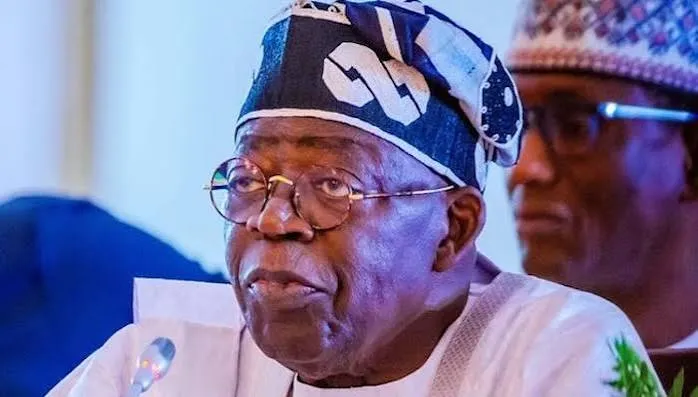
President Bola Tinubu has called for a major shift in Africa’s approach to its mineral resources, urging countries on the continent to stop relying on the export of raw minerals and instead develop industries capable of processing and adding value to them locally.
The President made the call on Monday at the Africa Minerals Strategy Group High-Level Roundtable on Critical Minerals Development in Africa, held in New York on the sidelines of the 81st United Nations General Assembly.
Tinubu, who was represented at the meeting by Vice President Kashim Shettima, said Africa’s vast mineral deposits should serve as a foundation for industrialisation, job creation and economic development rather than primarily benefiting industries outside the continent.
The roundtable was convened and chaired by Tinubu in collaboration with the Chairman of the Africa Minerals Strategy Group and Minister of Solid Minerals Development, Dr Dele Alake.
The meeting focused on the theme, “From Resources to Wealth: Continental Cooperation for Mineral Value Addition, Data Sovereignty, Innovative Financing and Critical Minerals Security.”
Tinubu said Africa had for decades supplied raw materials to other parts of the world while receiving finished products at significantly higher costs.
He argued that the continent must now develop the capacity to process its resources, manufacture products from them and retain a greater share of the economic benefits.
“For generations, Africa has furnished the materials of prosperity elsewhere. Our duty is to ensure that the future being fashioned from African minerals has room for African ambition,” he said.
The President expressed concern that communities where mineral resources are extracted often continue to face inadequate infrastructure, limited employment opportunities and insufficient economic benefits.
He said the situation was particularly important at a time when demand for critical minerals was increasing globally because of developments in clean energy, artificial intelligence and advanced manufacturing.
According to him, Africa should respond to the growing demand by developing processing and refining facilities, battery manufacturing, component industries, technological capacity and skilled manpower.
Tinubu said the success of the mining industry should therefore be assessed by its impact on employment, industrial development, infrastructure, technology transfer and the prosperity of communities.
He also emphasised the importance of continental cooperation, warning that African countries could weaken their collective bargaining power if they competed against one another by offering lower royalties, weaker local-content rules and excessive concessions.
“Fragmentation leaves us exporting raw materials and buying finished goods at a premium. Cooperation gives our markets scale, our industries integration, our financing reach and our negotiations authority,” he said.
On Nigeria’s mining sector, Tinubu outlined several measures being pursued by his administration to increase local benefits from mineral resources.
These include requiring local value addition for new mining licences, improving geological data, expanding investor access, organising artisanal miners into cooperatives and intensifying efforts against illegal mining.
He also called for stronger regulatory accountability within the sector.
Tinubu disclosed that revenue generated from mining increased from approximately N6 billion in 2023 to more than N38 billion in 2024, before rising to between N68.1 billion and N70 billion in 2025.
He further pointed to major foreign investment commitments and the development of large-scale lithium processing capacity in Nasarawa State as examples of the opportunities available in Nigeria’s mineral sector.
The President said his administration’s mining policy was designed to ensure that minerals extracted in Nigeria contribute to the growth of domestic industries and create opportunities for Nigerian workers, businesses and communities.
He called for partnerships with African countries and international investors based on mutual benefit, shared responsibility and respect for nationals priorities.
Tinubu also urged AMSG member states to adopt common positions on issues concerning Africa’s strategic mineral resources.
He said the Continental Integration and Economic Assurance Declaration adopted at the meeting should translate into a practical programme supported by financing, implementation timelines and accountability mechanisms.
The President further called on individual countries to identify their contributions to the initiative, while development finance institutions and sovereign investors should develop funding mechanisms capable of supporting Africa’s mineral ambitions.
He said Africa possessed the people, markets and innovation needed to develop its resources, but political commitment and investment were necessary to turn mineral wealth into sustainable prosperity.
Earlier, Alake said the proposed Continental Integration and Economic Assurance Declaration would provide a framework for integrating Africa’s critical and solid mineral value chains.
He said the growing participation of countries in the AMSG demonstrated the increasing attention being given to Africa’s solid minerals sector.
Kenya’s Minister of Blue Economy and Maritime Affairs, Hassan Ali-Joho, stressed the need for greater domestic resource mobilisation to finance mineral development.
He also urged AMSG members to promote transparency, maintain competitiveness and work towards greater alignment of mining licensing procedures across the continent.
Join us on our WhatsApp Platform @KOIKIMEDIA NEWS YOUR PAGE
Koikimedia Bringing the World 🌎 Closer to Your Doorstep

[mc4wp_form id=2402]