

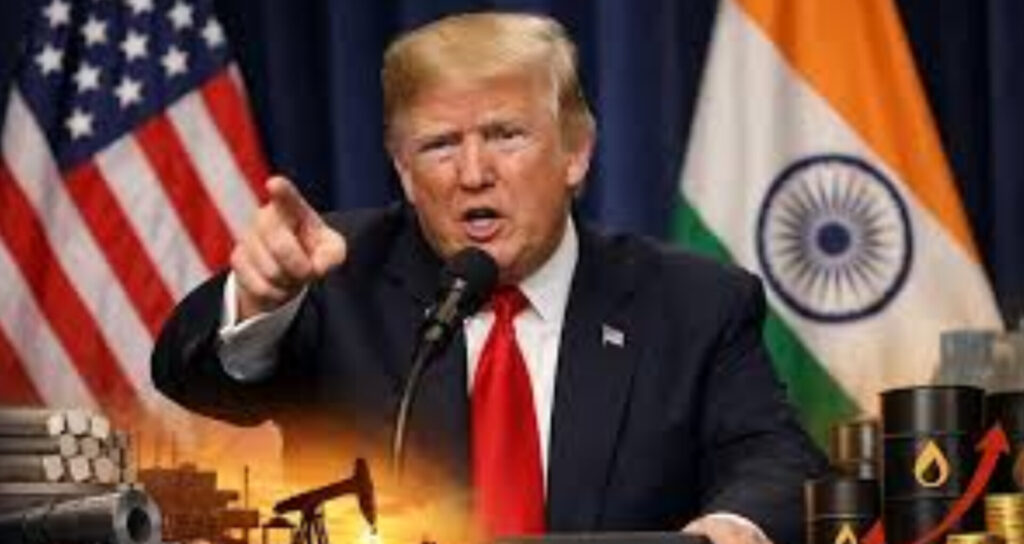
US President Donald Trump said on Sunday that Iran’s leadership had reached out to “negotiate” after he repeatedly threatened military action if Tehran killed protesters.
The country has been shaken for two weeks by a protest movement that continues to grow despite a crackdown human rights groups warn is becoming a “massacre.” Initially sparked by rising living costs, the demonstrations have evolved into a direct challenge to the theocratic system established after the 1979 revolution.
Information continues to emerge despite a days-long internet shutdown.
Videos from Tehran and other cities over the past three nights have shown large gatherings of protesters.
As reports of rising casualties surface, Trump said Iran had indicated its willingness to engage in talks. “The leaders of Iran called” on Saturday, he told reporters aboard Air Force One. “A meeting is being set up… They want to negotiate.” He added, however, that “we may have to act before a meeting.”
The US-based Center for Human Rights in Iran (CHRI) said it had received “eyewitness accounts and credible reports indicating that hundreds of protesters have been killed across Iran during the current internet shutdown.”
The Norway-based NGO Iran Human Rights (IHR) confirmed at least 192 deaths but warned the toll could be much higher.
“Unverified reports indicate that at least several hundreds, and according to some sources, more than 2,000 people may have been killed,” the group said. More than 2,600 protesters have been arrested, IHR estimates.
A video circulating on Sunday showed dozens of bodies outside a morgue south of Tehran. AFP geolocated the footage to Kahrizak, showing bodies in black bags and grieving relatives searching for loved ones.
An AFP journalist described Tehran as nearly paralysed. Meat prices have nearly doubled since the protests began, and many shops are closed. Those that remain open typically shut by 4 or 5 pm as security forces patrol the streets.
Fewer protest videos appeared on social media Sunday, though it was unclear whether this was due to the internet blackout. One widely shared clip showed demonstrators in Tehran’s Pounak district shouting slogans in favour of the ousted monarchy.
The protests represent one of the biggest challenges to Supreme Leader Ayatollah Ali Khamenei, 86, and follow Israel’s 12-day war against Iran in June, which the US supported.
State TV has aired footage of burning buildings, including a mosque, alongside funerals for security personnel. Yet after three days of mass demonstrations, state outlets sought to project calm, showing normal traffic on Sunday. Tehran Governor Mohammad-Sadegh Motamedian insisted that “the number of protests is decreasing.”
The Iranian government declared three days of national mourning for “martyrs,” including security personnel killed. President Masoud Pezeshkian urged Iranians to join a “national resistance march” on Monday to condemn the violence.
In response to Trump’s threats, Iran’s parliament speaker Mohammad Bagher Ghalibaf warned the US that military and shipping targets “are legitimate,” according to state TV.
Reza Pahlavi, son of Iran’s ousted shah and an emerging anti-government figurehead, said he was preparing to return to Iran to lead a democratic transition. “I’m already planning on that,” he told Fox News on Sunday.
He called on Iranian security forces and government employees to support demonstrators. “Employees of state institutions, as well as members of the armed and security forces, have a choice: stand with the people and become allies of the nation, or choose complicity with the murderers of the people,” he said in a social media post.
Pahlavi also urged supporters to replace the flags outside Iranian embassies with the pre-revolutionary national flag, now a symbol of global rallies backing the protests. In London, demonstrators succeeded in swapping the embassy flag for the tri-coloured banner used under the last shah.
AFP
Join us on our WhatsApp Platform @KOIKIMEDIA NEWS YOUR
koikimedia Bringing the World 🌎 Closer to Your Doorstep