

Prime Minister Benjamin Netanyahu announced Israel’s recognition of Somaliland a self-declared state that broke away from Somalia on December 26.
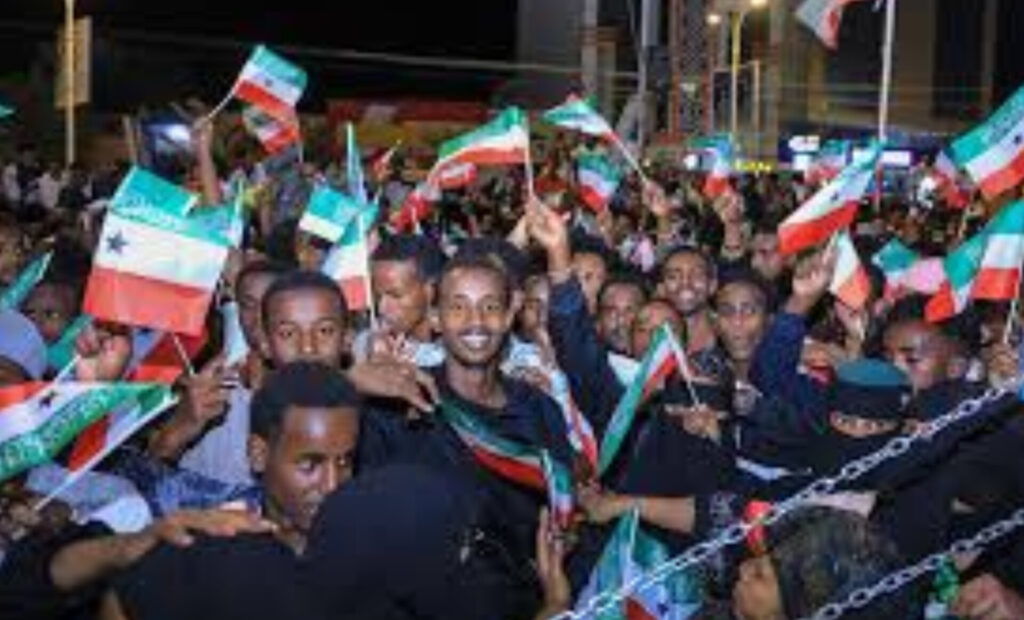
Israeli Foreign Minister Gideon Saar visited Somaliland on Tuesday, becoming the first Israeli official to travel to the breakaway republic since Israel established full diplomatic relations with it late last year.
Prime Minister Benjamin Netanyahu announced Israel’s recognition of Somaliland a self-declared state that broke away from Somalia on December 26.
He said the move was consistent with the “spirit of the Abraham Accords”, the US-backed initiative that encourages Arab states to normalise relations with Israel in exchange for diplomatic and financial incentives from Washington.
The decision has triggered protests within Somalia and drawn criticism from several countries and organisations, including Turkiye, Saudi Arabia and the African Union.
Speaking alongside Somaliland President Abdirahman Mohamed Abdullahi in the capital, Hargeisa, Saar said Israel would not be deterred by international opposition.
“We hear the attacks, the criticism, the condemnations,” Saar told reporters. “No one will decide for Israel whom we recognise or with whom we maintain diplomatic relations.”
Israel’s recognition of Somaliland comes after more than two years of war in Gaza and amid Israeli military actions across the region, including in Lebanon, Iran, Syria, Yemen and Qatar.
Strikes on Lebanon continue, and there are growing signs that Israel may be preparing renewed attacks on Iran, its main regional rival.
Analysts say Israel’s expanding military footprint reflects an effort, with strong US backing, to position itself as a dominant regional power unwilling to compromise with its adversaries.
The recognition of Somaliland, despite regional opposition, is widely seen as part of that broader strategy and has given Israel a new ally in the Horn of Africa.
Although Somaliland has governed itself for more than three decades with its own currency, passport and security forces it has struggled to gain international recognition.
The lack of recognition has left many in Somaliland hopeful that Israel’s decision could encourage other countries to follow suit, even as some express reservations about ties with Israel.
“Clans, militias and corruption have destroyed Somalia,” Somali journalist and human rights activist Abdalle Mumin, who was previously imprisoned by Somali authorities, told Newsmen. “At least in Somaliland there is some level of peace and stability.”
“Many people hope other countries will follow Israel’s lead,” he added.
Speculation has intensified over Israel’s motives for recognising Somaliland, with analysts highlighting the territory’s strategic location between the Red Sea and the Indian Ocean.
The port city of Berbera lies close to some of the world’s busiest shipping lanes, which have faced repeated attacks over the past two years by Yemen’s Houthi movement, an enemy of Israel.
Former Israeli peace negotiator Daniel Levy said these strategic considerations played a key role in the decision, noting that the Netanyahu government also benefited politically from suggestions that Somaliland could potentially receive Palestinians displaced from Gaza.
However, Levy believes Israel’s ambitions may extend further, including strengthening its strategic value to its closest ally, the United States.
Join us on our WhatsApp Platform @KOIKIMEDIA NEWS YOUR PAGE
koikimedia Bringing the World 🌎 Closer to Your Doorstep