Physical Address
304 North Cardinal St.
Dorchester Center, MA 02124
Physical Address
304 North Cardinal St.
Dorchester Center, MA 02124

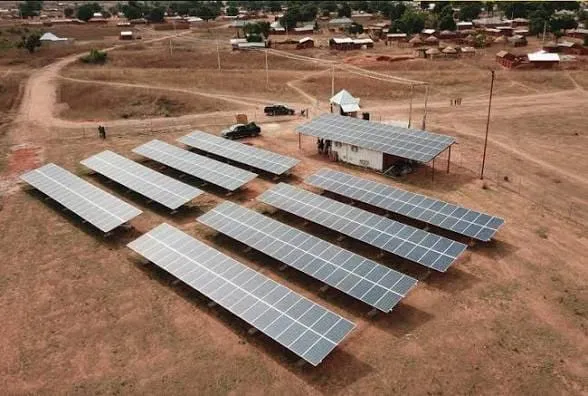
Nigeria has a significant opportunity to become a leading solar manufacturing and distribution hub in West Africa, as the region’s electricity deficit, abundant mineral resources and growing demand for alternative energy create investment opportunities estimated at billions of dollars.
Energy experts have urged the country to move beyond importing solar panels and renewable energy technologies to developing local manufacturing, mineral processing, battery production and assembly facilities capable of supplying both domestic and regional markets.
They also highlighted opportunities in solar-powered agriculture, irrigation, cold storage and agro-processing, while emphasising the need for affordable financing, improved product standards and technical skills development to ensure an inclusive energy transition.
The experts spoke at an event held at the Nigerian Pavilion during the ongoing 31st session of the United Nations Climate Change Conference (COP31) in Türkiye.
The discussion, themed ‘Just Transition: Unlocking Nigeria’s Solar Opportunities’, formed part of activities marking the conference’s Ocean, Seas, Nature and Land Use thematic day on Tuesday.
Speaking at the event, the Executive Director of the Global Initiative for Food Security and Ecosystem Preservation, Michael David, said Nigeria had the mineral resources and market potential needed to establish a competitive solar industry but was losing significant economic opportunities through its heavy reliance on imported technologies.
He identified 12 minerals that could support various stages of solar panel and battery production.
These include silica, lithium, copper, aluminium, iron ore, graphite, manganese, nickel, cobalt, tin, zinc and silver.
According to him, these resources are available across several Nigerian states, including Nasarawa, Kogi, Kwara, Niger, Zamfara, Plateau, Bauchi, Ondo and Osun.
David described solar energy as more than an alternative power source, arguing that it could serve as a catalyst for industrialisation, investment and economic transformation.
“Solar energy is not just an opportunity. It is industrialisation, investment and an economic transformation opportunity for Nigeria. The opportunity goes beyond deploying solar panels.
“It includes local manufacturing, mineral processing, battery storage, job creation, improved agricultural productivity and regional exports.
Nigeria must therefore move from importing solar panels to producing, manufacturing, assembling and exporting clean energy technologies,” he said.
David disclosed that Nigeria imported approximately 2.9 million solar panels last year, spending more than N450bn, despite having access to some of the raw materials required for local production.
He maintained that developing domestic manufacturing capacity would reduce dependence on imports, generate employment and position Nigeria to capture a larger share of the regional renewable energy market.
Highlighting the potential of the West African market, David cited figures showing that the region accounted for approximately 33 per cent of the 565 million people without access to electricity in sub-Saharan Africa in 2023, representing about 185 million people.
He said the scale of the electricity deficit provided a major opportunity for Nigerian manufacturers to expand beyond the domestic market and supply neighbouring countries.
David also disclosed that the International Finance Corporation had identifies approximately $8.5bn in commercially viable solar investment opportunities in Nigeria by 2030.
Broader opportunities in distributed renewable energy could exceed $18bn over the next decade.
He stressed that Nigeria should view the entire West African region as a strategic market for its emerging solar industry.
On the Federal Government’s position, the Senior Special Assistant to the President on Climate Technologies, Olamide Fagbuji, said the government was working to establish an enabling policy environment to attract private-sector investment into renewable energy.
He identified the Electricity Act, which allows state governments to participate in electricity generation and distribution, as a significant development that could accelerate decentralised power supply across the country.
Fagbuji also said Nigeria’s Nationally Determined Contribution 3.0 had established ambitious renewable energy targets, including an annual nine per cent increase in the share of renewables in the energy mix, towards achieving 50 per cent by 2030.
However, he noted that meeting these targets would require substantial financial resources and stronger partnerships between the government and private investors.
Meanwhile, the Executive Director of Bridge That Gap Initiative, Gloria Bulus, identified affordability as the biggest barrier preventing low-income households and underserved communities from adopting solar energy.
She explained that, unlike conventional electricity bills, which consumers could pay gradually, solar installations often require substantial upfront investments in panels, batteries and other components.
“For communities, it is not about the accessibility of solar panels. It is not about the solar itself. It is about the affordability of those panels and even the battery,” she said.
Bulus’s remarks highlighted the need for innovative financing arrangements and affordable payment structures to ensure that the benefits of solar energy reach low-income households and communities currently underserved by the national electricity grid.
The discussions underscored the importance of positioning Nigeria not merely as a consumer of renewable energy technologies but as a regional production and distribution centre capable of creating jobs, attracting investment and expanding electricity access across West Africa.
Join us on our WhatsApp Platform @KOIKIMEDIA NEWS YOUR PAGE
Koikimedia Bringing the World 🌎 Closer to Your Doorstep

[mc4wp_form id=2402]