Physical Address
304 North Cardinal St.
Dorchester Center, MA 02124
Physical Address
304 North Cardinal St.
Dorchester Center, MA 02124

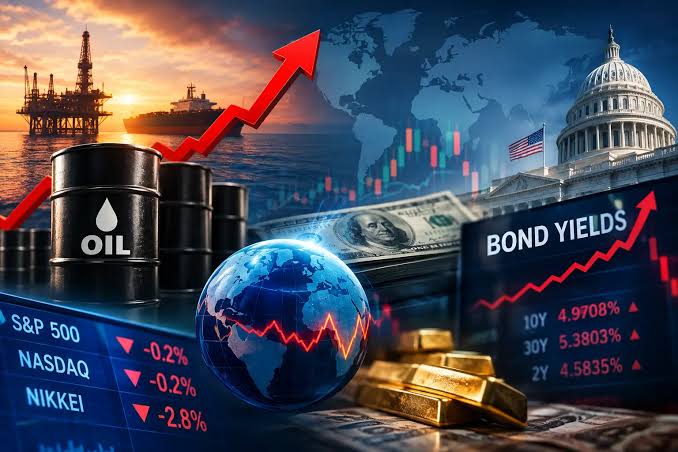
The benchmark United States government bond yield has climbed to its highest level in 19 years, as investors increasingly anticipate higher interest rates following another rise in global oil prices.
The yield on the 10-year US Treasury note reached 5.02 per cent on Tuesday, marking its highest level since the 2007 global financial crisis.
The 10-year Treasury yield is closely watched by financial markets because it influences borrowing costs across the United States, including mortgage rates, consumer loans and other forms of debt.
The latest increase in US bond yields comes amid growing concerns over the economic impact of the ongoing conflict between the United States, Israel and Iran.
The escalation has pushed crude oil prices above $100 per barrel, the first time they have reached that level since May.
Bond yields have also risen sharply in other major economies. Germany’s 10-year government bond yield reached 3.554 per cent on Monday, its highest level since mid-2009, before easing slightly to 3.547 per cent on Tuesday.
In Japan, the 10-year government bond yield has moved above 3 per cent for the second time this month, reaching its highest level in three decades.
Analysts said investors are increasingly concerned that sustained increases in crude oil prices could intensify inflationary pressures and force central banks to maintain or raise interest rates.
“Markets are likely to remain focused on the risk that higher crude oil prices could add to inflationary pressures and, in turn, push interest rates higher,” Yokoo Akihiko, an analyst at Mitsubishi UFJ Bank, said in a note cited by Reuters.
Oil prices have continued to rise as the conflict shows little sign of ending, with energy infrastructure and key shipping routes, including the strategically important Strait of Hormuz, facing continued disruptions.
Last week, Yemen’s Iran-aligned Houthi rebels reportedly moved forces towards the Bab al-Mandeb Strait, another major shipping route that provides an alternative route for Saudi oil exports amid disruptions around the Strait of Hormuz.
Shortly afterwards, attacks suspected of being carried out by an Iran-aligned Iraqi militia temporarily disrupted Saudi Arabia’s East-West oil pipeline, which transports crude to the kingdom’s ports on the Red Sea.
Meanwhile, the European Central Bank raised interest rates last week in an effort to control inflation.
Financial markets are now watching the US Federal Reserve and the Bank of Japan, with investors expecting both institutions to announce their latest monetary policy decisions this week.
The rise in government bond yields is also being linked to increased competition from corporate bonds, particularly as companies raise funds to finance the rapid expansion of artificial intelligence-related investments.
Concerns over the sustainability of government debt levels in major economies have further contributed to pressure on bond markets.
Economists warn that prolonged high oil prices could create additional challenges for governments and central banks by increasing inflation while simultaneously slowing economic growth.
Join us on our WhatsApp Platform @KOIKIMEDIA NEWS YOUR PAGE
Koikimedia Bringing the World 🌎 Closer to Your Doorstep

[mc4wp_form id=2402]