

The unrest is the latest challenge facing President Ahmed al-Sharaa’s fledgling administration, which has been working to stabilise the country and restore its international standing after 14 years of devastating civil war
By Adeleke Adekunle
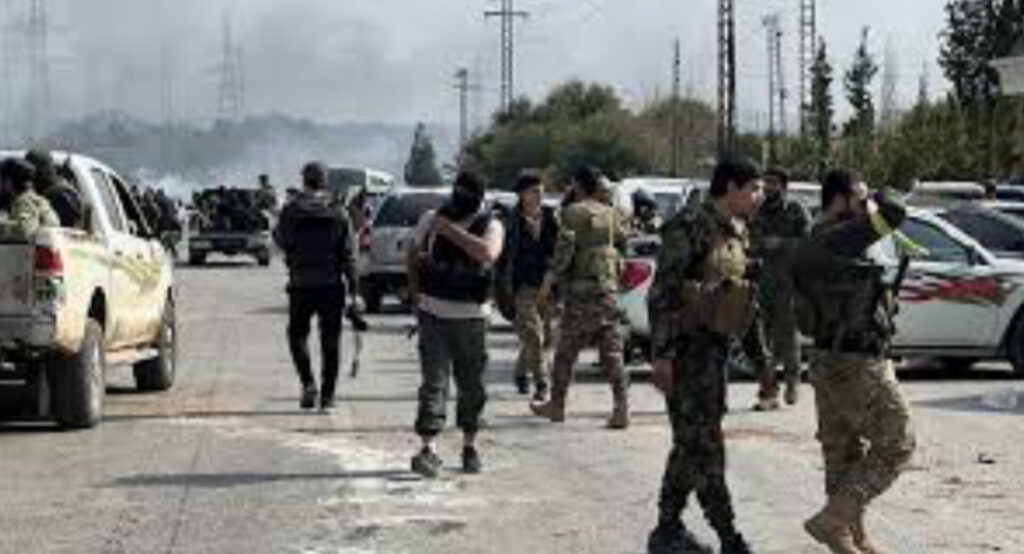
Syrian government forces have been deployed to the coastal cities of Latakia and Tartous following protests that escalated into deadly clashes, leaving at least three people dead and 60 others injured.
The unrest is the latest challenge facing President Ahmed al-Sharaa’s fledgling administration, which has been working to stabilise the country and restore its international standing after 14 years of devastating civil war.
Syria’s Ministry of Defence said on Sunday that army units, including tanks and armoured vehicles, had moved into the centres of several western cities in response to attacks by what it described as “outlaw groups” targeting civilians and security forces, with the aim of restoring stability.
According to Syria’s state news agency SANA, officials said the violence was carried out by “remnants of the defunct regime” of former President Bashar al-Assad during protests in Latakia.
SANA reported that 60 people were injured as a result of stabbings, stone attacks and gunfire directed at both security personnel and civilians.
Clashes reportedly erupted when protesters were confronted by pro-government demonstrators, after which masked gunmen opened fire on security forces.
The Ministry of Interior said a police officer was among those killed.
Newsmen confirmed that security forces came under gunfire at the Azhari roundabout in Latakia. Meanwhile, in Tartous, two security personnel were wounded after unknown attackers threw a hand grenade at the al-Anaza police station in Baniyas.
The violence erupted as thousands of Alawite Syrians took to the streets on Sunday across the community’s heartland in central and coastal Syria to protest against violence and discrimination.
The protests were initiated by Ghazal Ghazal, an Alawite spiritual leader living abroad, who called on people to “show the world that the Alawite community cannot be humiliated or marginalised” following the deadly bombing of a mosque in Homs on Friday.
The attack, which killed eight people and was claimed by a Sunni group called Saraya Ansar al-Sunna, marked the latest act of violence against the religious minority to which the ousted former President al-Assad also belongs a community that held significant influence during his rule.
Protesters also demanded that the government introduce federalism, a system that would decentralise power from Damascus and grant greater autonomy to minority communities, as well as the release of Alawite prisoners.
“We do not want a civil war, we want political federalism. We do not want your terrorism. We want to determine our own destiny,” Ghazal, head of the Islamic Alawite Council in Syria and abroad, said in a Facebook video message.
Join us on our WhatsApp Platform @KOIKIMEDIA NEWS YOUR PAGE
KoikiMedia Bringing the World 🌎 Closer to Your Doorstep