

Children aged 0 to 14 were particularly affected, with a poverty rate of 72.5 per cent, reflecting widespread deprivation among the country’s youngest citizens
By Titilope Adako
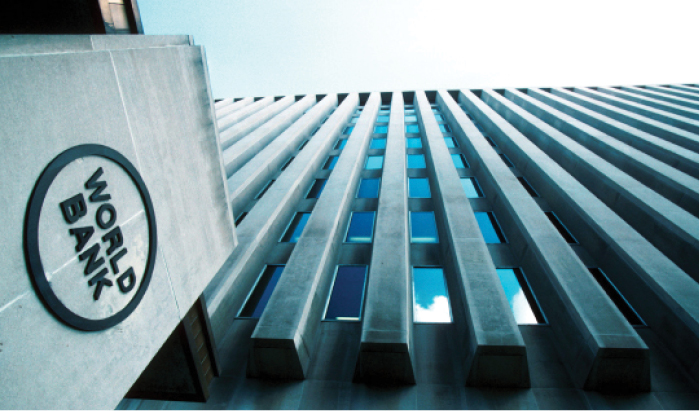
A new World Bank report has revealed that 75.5 per cent of Nigerians in rural areas are currently living below the poverty line, indicating a sharp rise in hardship across the country’s hinterlands.
The disclosure was made in the World Bank’s April 2025 Poverty and Equity Brief for Nigeria, which paints a bleak picture of worsening economic conditions, deepening inequality, and underdevelopment, especially outside urban centres.
While poverty affects urban areas as well, the report noted that rural communities are experiencing more severe economic stagnation, rising inflation, and insecurity, all of which have worsened living conditions.
“Based on the most recent official household survey data from Nigeria’s National Bureau of Statistics, 30.9 per cent of Nigerians lived below the international extreme poverty line of $2.15 per person per day in 2018/19 before the COVID-19 pandemic,” the report said.
It also highlighted deep regional disparities, stating that poverty was more pronounced in northern Nigeria with a rate of 46.5 per cent, compared to 13.5 per cent in the south. Inequality, measured by the Gini index, stood at 35.1 in 2018/19.
The World Bank further estimated Nigeria’s “Prosperity Gap” — the average amount by which individual incomes must increase to reach a $25 daily prosperity threshold — at 10.2, which is higher than in most comparable countries.
Children aged 0 to 14 were particularly affected, with a poverty rate of 72.5 per cent, reflecting widespread deprivation among the country’s youngest citizens.
Gender-based analysis showed that 63.9 per cent of females and 63.1 per cent of males live below the $3.65 lower-middle-income threshold.
Education levels also strongly influenced poverty rates. Nigerians with no formal education had a poverty rate of 79.5 per cent. Those with primary education had a rate of 61.9 per cent, while secondary school graduates recorded 50.0 per cent. Only 25.4 per cent of those with tertiary education were considered poor.
The report also underscored multidimensional poverty indicators, noting that 30.9 per cent of Nigerians live on less than $2.15 a day, 32.6 per cent lack access to basic drinking water, 45.1 per cent do not have access to proper sanitation, and 39.4 per cent are without electricity.
Join us on our Whatssap Platform @KOIKIMEDIA NEWS YOUR PAGE
KoikiMedia Bringing the World 🌍 Closer to Your Doorstep