

The historic letter, described as a message of “love and warning,” was addressed to President Tinubu not only as Nigeria’s current leader but also as “an eminent son of the Yoruba Nation
By Olayomi Koiki
May 26, 2025 | Lagos, Nigeria
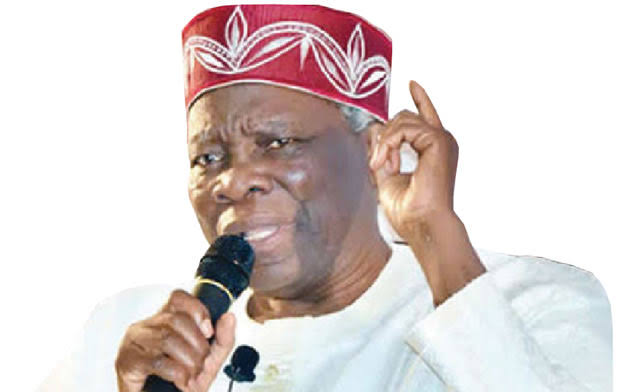
In a powerful public letter dated May 25, 2025, the Yoruba Self-Determination Movement, led by Professor (Senator) Banji Akintoye, has called on President Bola Ahmed Tinubu to urgently initiate a peaceful and formal negotiation process that would lead to the exit of the Yoruba Nation from the Federal Republic of Nigeria.
The historic letter, described as a message of “love and warning,” was addressed to President Tinubu not only as Nigeria’s current leader but also as “an eminent son of the Yoruba Nation.” It presents a sweeping indictment of the Nigerian state, detailing years of persecution, harassment, and institutionalized abuse suffered by the Yoruba people under successive administrationsincluding Tinubu’s own government.
The letter, signed by Professor (Senator) Banji Akintoye, a prominent historian and the National Leader of the Yoruba Self-Determination Movement, outlines a series of grievances, including what the group describes as “systemic human rights abuses” by federal security agencies against Yoruba youths and communities.
In the detailed communication, the movement alleges that security agencies such as the Nigerian Police and DSS continue to harass, unlawfully detain, and extort Yoruba youths in a bid to suppress their constitutionally-backed call for self-determination.
“Your Excellency, these human rights abuses occur frequently and in all parts of Yorubaland,” the letter stated. “We have seen DSS operatives detain the wives and children of wanted individuals when they couldn’t find their targets
The group stressed that the Yoruba Nation’s struggle has always been peaceful, citing past rallies held across Nigeria and globally in cities like Washington D.C., London, and Paris as examples of civil and lawful conduct. It also recalled the publication of a widely circulated document in 2019, titled “Yoruba Nation Chooses the Noble Path to Its Noble Goal,” which outlined the peaceful approach of the movement.
Yoruba Youths Brutalized, Rights Violated
The letter recounts ongoing, widespread violations of human rights allegedly perpetrated by Nigeria’s federal security agencies, especially the Police and the Department of State Services (DSS), against Yoruba youths in the South-West, Kwara, and Kogi States.
“These agencies tend to view all Yoruba youths as insurgents or terrorists. They arrest without cause, detain unlawfully, and extort money before release,” the letter states.
In some cases, the DSS allegedly detained wives and children in lieu of wanted individuals—a move the movement describes as “outrageous and inhumane.”
Yoruba Right to Self-Determination Backed by International Law
The movement stresses that its activities are fully peaceful and legal, citing multiple international instruments such as the United Nations Charter, the International Covenant on Civil and Political Rights, and the African Charter on Human and Peoples’ Rights—to back its call for Yoruba self-determination.
“Nigeria is a signatory to these conventions, and peaceful advocacy for self-determination is not illegal,” it emphasizes.
A Legacy of Peaceful Advocacy
The movement proudly recounts its history of nonviolent mass rallies both in Nigeria and abroad—in cities such as London, Paris, Washington D.C., and at the United Nations Headquarters in New York. It also points to its 2019-2020 publication titled “Yoruba Nation Chooses the Noble Path to its Noble Goal,” which detailed its peaceful approach and was delivered to then-President Muhammadu Buhari.
Selective Persecution, Ethnic Bias, and Border Closure
In a section laden with emotion and political frustration, the movement criticizes what it describes as ethnic bias and systemic double standards. While Fulani militias and insurgents reportedly continue to carry out widespread killings, kidnappings, and destruction, Yoruba activists are criminalized and vilified for merely organizing peaceful rallies.
It also condemns the continued closure of the border between Southwest Nigeria and Benin Republic, which it says has worsened food insecurity in Yorubaland—while Northern borders, through which terrorists allegedly flow in, remain open.
“A young Yoruba man who defended his people from killer herdsmen is being treated like a criminal, denied access to his bank accounts for four years, and had his home invaded by a DSS-led force,” the letter recalls, a likely reference to Yoruba freedom fighter Chief Sunday Adeyemo Igboho.
Warnings of a Looming National Implosion
The movement issues a grave warning that Nigeria is heading down the same path as Yugoslavia in the 1990s, citing increasing factionalism, terrorism, economic collapse, and the growing risk of civil war. It warns that the international community could hold Tinubu personally accountable if he fails to act decisively to prevent national disintegration.
“Yugoslavia imploded because leaders refused peaceful separation. The world condemned them afterward. We pray that the Almighty spares you such a fate,” the letter reads.
Security Chiefs Admit Failure, R2P Invoked
In a damning section, the letter quotes recent public statements by Nigeria’s own top military and security leaders, who admitted the government’s inability to protect its citizens:
- DSS: “Each person should protect himself and his community.”
- Chief of Defence Staff: “We cannot fight bandits; it is political.”
- Chief of Air Staff: “We can’t bomb terror out of Nigeria.”
The movement uses these statements to invoke the UN’s “Responsibility to Protect” (R2P) doctrine—warning that international intervention could be triggered if a state admits its failure to safeguard its own people.
A Call to Action, Not Rebellion
Despite the stern tone, the letter concludes with a heartfelt appeal, describing the message as driven by love for Tinubu, the Yoruba people, and humanity. It warns, however, that continuing to suppress Yoruba self-determination could push peaceful youths to react violently, as seen in historical Yoruba uprisings in 1965–66 and 1983.
Final Plea to Tinubu
“We ask you, Mr. President, to facilitate negotiations between representatives of the Yoruba people and the Nigerian government for a peaceful separation. Keeping us forcibly in Nigeria only prolongs our people’s suffering.”
The Yoruba Self-Determination Movement says the time is now, before Nigeria collapses under its contradictions.
Professor (Senator) Adebanji Akintoye
NATIONAL LEADER YORUBA SELF-DETERMINATION MOVEMENT
Join us on our Whatssap Platform @KOIKIMEDIA NEWS YOUR PAGE
KoikiMedia Bringing the World 🌎 Closer to Your Doorstep