Physical Address
304 North Cardinal St.
Dorchester Center, MA 02124
Physical Address
304 North Cardinal St.
Dorchester Center, MA 02124

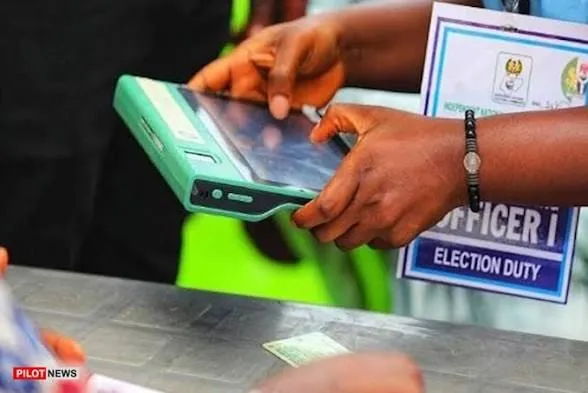
The Independent National Electoral Commission (INEC) has dismissed allegations that its Bimodal Voter Accreditation System (BVAS) can be remotely logged out before the conclusion of voting, describing the claims as false, misleading and capable of creating unnecessary public concern about the credibility of Nigeria’s electoral process.
The commission issued the clarification on Tuesday through its official X account in response to a viral Instagram video alleging that election officials could remotely log voters out of the BVAS before voting officially ended.
INEC described the video as fabricated and urged Nigerians to disregard the claims, insisting that the BVAS operates under established procedures that prevent unauthorised individuals or external authorities from remotely logging out the device.
Explaining how the system works, the commission stated that each polling unit is assigned unique login credentials, which are issued to the presiding officer on the eve of an election.
These credentials enable the presiding officer to access the BVAS for voter accreditation and subsequently upload the polling unit’s result sheet after voting has been concluded.
INEC emphasised that only the election official operating the device has the authority to log in or log out during voter accreditation and result uploading.
It further stressed that there is no provision within the system for any external individual or authority to remotely log out a BVAS device.
The commission also addressed concerns surrounding the possibility of election results being lost when uploaded offline, assuring Nigerians that such results remain securely stored on the device until they are successfully transmitted to the INEC Result Viewing Portal (IReV).
According to INEC, the IReV application was upgraded after the 2023 general elections to incorporate an offline uploading feature.
The improvement followed incidents during the 2023 elections when some electoral officials were reportedly held hostage at polling units because poor network connectivity prevented them from uploading election results.
To prevent a recurrence, the commission introduced the offline uploading capability, allowing presiding officers in areas with poor or no internet connectivity to upload result sheets without waiting for network services to become available.
INEC explained that once a result sheet has been uploaded offline, it remains securely stored on the BVAS device pending successful transmission.
The commission added that the results are automatically transmitted to the IReV portal once the device regains internet connectivity.
This process takes place as electoral officials move from their polling units to the ward collation centres and does not require any additional manual intervention.
Reassuring Nigerians, INEC maintained that both the BVAS and IReV platforms operate under established procedures designed to protect electoral integrity, promote transparency and strengthen public confidence in the electoral process.
The commission also appealed to members of the public to exercise caution when sharing information about election technology, warning against the circulation of unverified reports capable of misleading voters and creating doubts about the electoral system.
It advised Nigerians to rely exclusively on its official communication channels for accurate information concerning its operations.
INEC reaffirmed its commitment to transparency, accountability and the conduct of free, fair and credible elections across the country.
Join us on our WhatsApp Platform @KOIKIMEDIA NEWS YOUR PAGE
Koikimedia Bringing the World 🌎 Closer to Your Doorstep

[mc4wp_form id=2402]