Physical Address
304 North Cardinal St.
Dorchester Center, MA 02124
Physical Address
304 North Cardinal St.
Dorchester Center, MA 02124

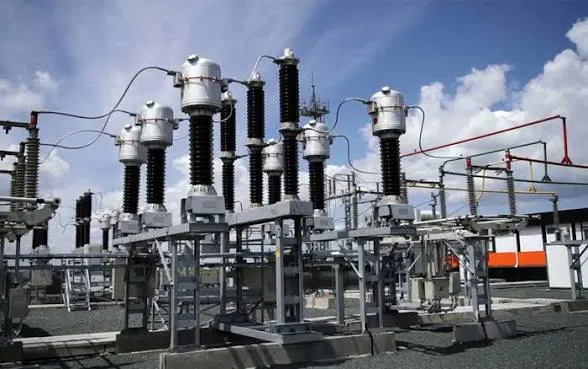
The Federal Government has turned to the bond market to address its mounting debt to electricity generation companies, estimated at ₦6 trillion, amid concerns over persistent power supply challenges and the financial sustainability of the electricity sector.
The move follows the issuance of a ₦728.979 billion Series 2 bond in September 2026 under the government’s ₦4 trillion Power Sector Debt Reduction Programme to settle verified outstanding debts owed to generation companies and their associated gas suppliers.
The transaction comprised ₦402 billion in cash bonds raised from the domestic capital market and ₦326.979 billion in non-cash bonds allocated to participating generation companies.
The Managing Director and Chief Executive Officer of the Nigerian Bulk Electricity Trading Plc (NBET), Akin Odeyemi, disclosed at the weekend that the agency had commenced settling participating generation companies, known as GenCos, and their associated gas companies following the successful issuance and signing of the bonds.
Odeyemi described the development as a significant step in implementing the Presidential Power Sector Debt Reduction Programme under President Bola Tinubu’s administration and in furtherance of the Renewed Hope Agenda.
He said the settlement was being conducted through a combination of cash and non-cash bonds in accordance with the approved framework.
The development comes as the Federal Government continues to face substantial electricity subsidy obligations, which have placed additional pressure on public finances.
According to the Nigerian Electricity Regulatory Commission’s 2025 industry report, the government’s gross tariff subsidy obligation stood at ₦1.928 trillion in 2025, representing 57.44 per cent of the total invoice issued by NBET.
The figure translated to an average monthly subsidy obligation of ₦160.69 billion.
A breakdown of the subsidy obligation showed that ₦536.40 billion was recorded in the first quarter, ₦514.36 billion in the second quarter, ₦458.76 billion in the third quarter and ₦418.79 billion in the fourth quarter.
The 2025 figure was slightly lower than the ₦1.949 trillion recorded in 2024.
Meanwhile, the Minister of Power, Joseph Tegbe, has insisted that electricity supply has improved over the past three months, despite complaints about inadequate power supply in several parts of the country.
Tegbe said operational records showed that electricity generation and transmission had exceeded 5,000 megawatts in recent weeks, compared with between 3,700MW and 4,700MW before June.
He added that generation reached a peak of 5,330MW during August and September.
The minister acknowledged, however, that improved national generation figures did not necessarily translate into reliable electricity supply for every community.
He said the government was working to stabilise the electricity value chain, restore market discipline and strengthen governance.
As part of the interventions, Tegbe disclosed that the 375MW Alaoji open-cycle power plant had been restored to the national grid after three years offline.
He also said new transformers commissioned at Apapa, Ijora, Alausa and Lekki in Lagos had unlocked 672MW of transmission capacity, while a new 300MVA transformer energised at Katampe in Abuja had provided an additional 240MW.
The minister added that the government was expanding access to renewable energy through solar and mini-grid projects.
According to him, 62 solar and mini-grid installations had been completed across 30 states under the Rural Electrification Agency and its partners, providing approximately 43.6MW of installed solar capacity and 41,735 new connections, with an estimated reach of more than 208,000 people.
However, the Special Adviser to the President on Power and Chairman of the Presidential Task Force on Power Sector Reset and Restoration, Dr Lanre Babalola, said Nigeria’s electricity reforms remained incomplete.
Babalola said the country’s power challenge was not simply a lack of generation capacity but the inability to consistently convert available capacity into reliable electricity and sustainable investment.
He noted that although generation and distribution assets had been privatised and NBET established as a bulk electricity trader, the transition to a competitive electricity market envisaged by the reforms had not been completed.
According to him, the single-buyer model was originally intended as a transitional arrangement to enable market participants to develop the financial capacity required for direct electricity contracts.
He argued that retaining the arrangement indefinitely could become a structural constraint on the sector’s development.
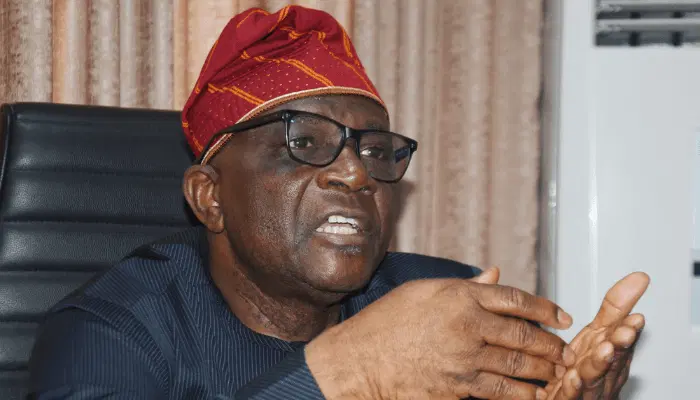
Also reacting to the situation, a lawyer and Lead Consultant on Power Sector matters at Sage Consulting, Bode Fadipe, said the figures raised questions about the value electricity consumers received for their payments.
“What this data has just confirmed is that Nigerians have been paying for darkness,” Fadipe said.
He identified inadequate investment in electricity infrastructure as one of the major factors affecting power supply and called on NERC to enforce its directive requiring distribution companies to retain part of their revenue for investment.
Fadipe also urged the regulator to monitor compliance, establish clear timelines for service improvements and conduct forensic audits of investments made by distribution companies to determine whether funds earmarked for infrastructure were properly utilised.
He further called for stronger debt recovery efforts involving relevant electricity market participants.
Similarly, the Executive Director of the Electricity Consumer Protection Advocacy Centre, Chief Princewill Okorie, called for stronger enforcement of consumer protection regulations.
Okorie said electricity users continued to face challenges involving estimated billing, infrastructure charges and alleged non-compliance with regulatory directives.
He alleged that consumers in some communities were required to contribute money towards transformers and other distribution equipment, despite the responsibilities of distribution companies.
He questioned the transparency and accountability of electricity bills issued to consumers and called for stronger monitoring of distribution companies.
Okorie also advocated the establishment of a dedicated mechanism to investigate alleged electricity-related violations and improve public awareness of consumer rights.
He urged relevant authorities to strengthen consumer protection, particularly in rural communities, and questioned the absence of a dedicated consumer protection unit within the Federal Ministry of Power.
The Federal Government’s bond programme is expected to provide some financial relief to participating power generation companies and gas suppliers.
However, stakeholders maintain that resolving the sector’s challenges will require sustained investment, stronger regulation and the completion of outstanding electricity market reforms.
Join us on our WhatsApp Platform @KOIKIMEDIA NEWS YOUR PAGE
Koikimedia Bringing the World 🌎 Closer to Your Doorstep

[mc4wp_form id=2402]