Physical Address
304 North Cardinal St.
Dorchester Center, MA 02124
Physical Address
304 North Cardinal St.
Dorchester Center, MA 02124

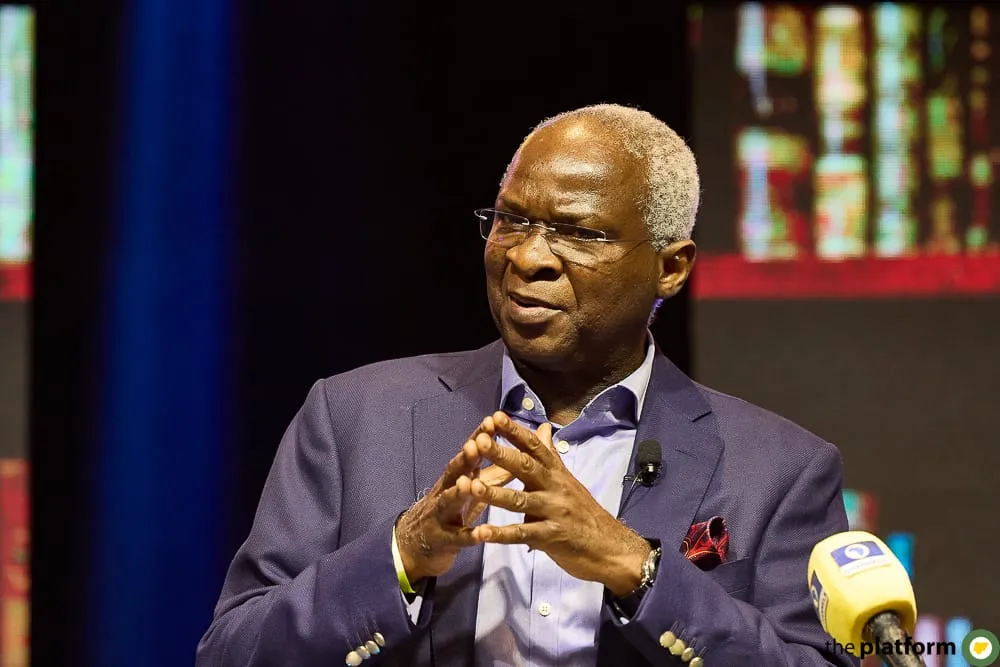
Former Lagos State Governor and ex-Minister of Works and Housing, Babatunde Fashola, has challenged former Vice-President Atiku Abubakar to explain how he intends to finance his proposed restoration of fuel subsidy if elected president in 2027.
Fashola described the proposal as unrealistic, arguing that Atiku had yet to address the practical and economic challenges that could undermine its implementation.
The former governor raised concerns about Nigeria’s inability to consistently meet its crude oil production targets, persistent insecurity in oil-producing communities and the availability of sufficient crude oil to support domestic refining and a sustainable subsidy arrangement.
He made the remarks on Tuesday during an interview on Channels Television’s Politics Today.
Fashola questioned the source of the crude oil that would be required to supply local refineries and sustain the proposed subsidy programme, considering the country’s existing production challenges.
He argued that even with functional refineries, Nigeria would still need to address its crude oil production shortfalls and security problems before considering the financial implications of restoring subsidy payments.
“If we have refineries working, what is our current oil quota? Are we optimising it yet? No, because they are legacy issues, challenges with security people, vandalism. So where is this magic crude oil going to come from? People are entitled to ask,” he said.
The former minister insisted that Atiku must provide convincing explanations and demonstrate the feasibility of the proposal rather than rely on political promises to gain public support.
“If he can explain, good, let the people choose. But without proof, it is like abracadabra,” he stated.
Fashola stressed that his criticism was directed at the proposed policy rather than Atiku as an individual, noting that any decision on fuel subsidy must be supported by clear economic realities and a sustainable funding plan.
“The proposal is not realistic. I am looking at the proposal, not the personality,” he said.
He also questioned the consistency of Atiku’s position on fuel subsidy, recalling that the former vice-president had supported its removal during the 2023 presidential election campaign.
According to Fashola, the change in position raises questions about the reasons behind the proposed reversal and the measures that would make the policy sustainable if implemented.
The former governor further argued that restoring fuel subsidy would require legislative intervention, as the existing legal framework would have to be amended to accommodate the policy.
He also questioned whether members of the National Assembly would be willing to support such a move, considering the financial burden it could place on government resources.
Drawing from his experience in the administration of former President Muhammadu Buhari, Fashola said subsidy payments had previously affected the revenue available to state governments.
He recalled that the financial burden of maintaining the subsidy regime had significantly reduced allocations to states, making it difficult for some governments to meet their financial obligations.
“I was in a government that was paying subsidy, and the states were not getting money. So are we going to go back to partial, near-zero returns, states borrowing money to pay salaries? Is that where you want us to go?” he asked.
Atiku had announced in August 2026 that he would restore fuel subsidy if elected president in the 2027 general elections.
The former vice-president proposed a temporary and audited subsidy arrangement targeting petroleum products refined locally, arguing that the policy would reduce fuel and transportation costs while easing the economic burden on Nigerian households.
He maintained that the proposed arrangement would be designed to provide relief to consumers without returning to the previous system of unchecked subsidy payments.
However, President Bola Tinubu announced the removal of the petrol subsidy during his inauguration on May 29, 2023, as part of his administration’s economic reform programme.
The decision was followed by significant increases in petrol prices and transportation costs, contributing to the rising cost of living and placing additional pressure on households and businesses.
The subsidy removal has remained a major issue in Nigeria’s economic and political debate, with opposition figures and other stakeholders expressing differing views on its impact and the best approach to addressing the country’s energy challenges.
With the 2027 general elections approaching, fuel subsidy policy is expected to remain a significant issue in discussions about economic management, petroleum pricing and the welfare of Nigerians.
Join us on our WhatsApp Platform @KOIKIMEDIA NEWS YOUR PAGE
Koikimedia Bringing the World 🌎 Closer to Your Doorstep

[mc4wp_form id=2402]