Physical Address
304 North Cardinal St.
Dorchester Center, MA 02124
Physical Address
304 North Cardinal St.
Dorchester Center, MA 02124

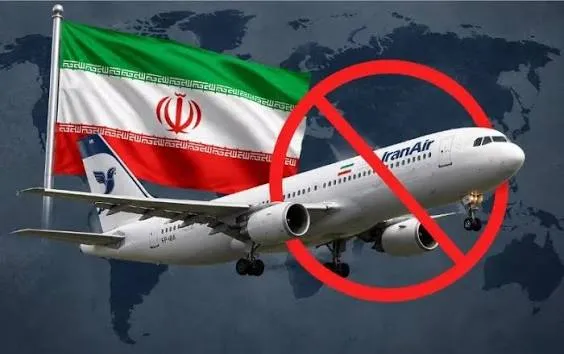
Travel has become increasingly difficult for Iranian civilians as United States sanctions restrict Iranian airlines from accessing airspace and aviation services in several countries, while international carriers continue to suspend flights to Iran.
The latest US measures have forced many travellers to seek alternative routes by road, resulting in longer journeys, overcrowded border crossings and sharply higher transportation costs.
On September 8, the US Department of the Treasury sanctioned 27 airlines, covering Iranian carriers that had not previously been targeted by Washington.
Major airlines such as Iran Air and Mahan Air have already faced extensive US sanctions but have continued to operate limited services.
The latest sanctions also target individuals and companies involved in aviation support and procurement in countries including the United Arab Emirates, Türkiye, China, India, the United Kingdom and Malaysia.
US Treasury Secretary Scott Bessent said airports and companies providing Iranian-operated aircraft with fuel, landing services or ticketing support could face secondary US sanctions that could restrict their access to the US financial system.
The measures are part of Washington’s broader campaign of economic pressure against Iran amid the ongoing US-Israel war.
Iranian flights severely disrupted
The expiry of a short wind-down period on Wednesday resulted in the cancellation of most remaining Iranian flights to Türkiye, the UAE and China.
Several neighbouring countries that had continued to provide Iranian airlines with access to their airspace and airports have also stopped offering such services. These include Oman, Azerbaijan and Georgia.
In Iraq, Baghdad International Airport was declared off-limits to Iranian carriers, although flights to Najaf were still operating on Wednesday.
International airlines have also significantly reduced or suspended services to Iran.
Turkish Airlines has suspended flights until at least March 2027, while Qatar Airways, Emirates and Lufthansa have also suspended operations.
Aviation sector faces further pressure
Iranian aviation and transit expert Mohammadreza Ebrahimpour said years of US sanctions had already forced Iranian airlines to depend heavily on third countries and smaller companies for fuel, spare parts and other aviation services.
However, he described the latest restrictions imposed by neighbouring countries as a new phase in the sanctions regime.
Ebrahimpour said restrictions on international airlines using Iranian airspace were particularly damaging because Iran earns substantial revenue from overflight fees.
According to him, Iran previously earned more than $300 million annually from such payments, which helped support aviation infrastructure and related services.
The restrictions could also threaten thousands of jobs across Iran’s aviation, tourism and hospitality sectors.
Ebrahimpour said China and Russia could potentially provide assistance to Iran, although companies and financial institutions in both countries have sometimes reduced their dealings with Iran to avoid exposure to secondary US sanctions.
Travellers turn to land routes
The widespread flight cancellations have forced thousands of Iranian travellers to seek alternative routes through neighbouring countries, particularly Türkiye and Armenia, where international air connections remain available.
Heavy congestion has been reported at the Bazargan and Razi border crossings with Türkiye, as well as on routes leading towards Armenia’s capital, Yerevan.
However, overland travel into Azerbaijan remains restricted, preventing many Iranians from crossing the country to catch international flights.
Border crossings with Iraq, including Shalamcheh and Chazabeh, were temporarily closed earlier in September before reopening to passengers on September 13.
The disruption has resulted in significantly longer journeys and higher travel costs.
Reports indicate that bus tickets from Iran to Türkiye have sold for up to four times their normal prices on the black market because of increased demand.
Some travellers are young Iranians seeking to take international language examinations that cannot be administered inside Iran because of sanctions.
Such tests are often required for people seeking to study, work or settle abroad.
Iranian academics have also raised concerns about increasing isolation from the international academic community.
Universities in countries including Norway, Australia, Singapore and Estonia have reportedly rejected some postgraduate and research applications from Iranian applicants because of US education-related sanctions.
Economic and humanitarian concerns
The disruption comes as Iran’s economy faces increasing pressure, leaving many of the country’s estimated 90 million people unable to afford international travel or even domestic flights.
The US administration has said its sanctions are directed at the Iranian authorities and are intended to prevent Iranian commercial aviation from being used for weapons procurement and transportation, including activities linked to the Islamic Revolutionary Guard Corps.
However, the sanctions on entire airlines have also had significant consequences for ordinary civilians.
Iran’s international aviation network was already severely weakened before the latest sanctions.
Aviation analytics company Cirium reported that international flight capacity in August 2026 was 49 percent lower than in August 2025, despite a modest recovery from July.
The latest cancellations could further affect the importation of goods by air, particularly as maritime trade through the Strait of Hormuz and road and rail cargo routes have also been disrupted by the war and sanctions.
Medical supplies are among the goods imported into Iran by air, raising concerns that the latest restrictions could place additional pressure on the country’s healthcare system.
An Iranian pharmaceutical executive previously told Newsmen that the cost of some imported supplies had increased by as much as tenfold because of sanctions, broader economic difficulties and damage caused by the war.
Speaking at the United Nations General Assembly in New York on Wednesday, Iranian President Masoud Pezeshkian accused the Trump administration of “bullying.”
Pezeshkian said Iran had demonstrated its resilience and could not be forced to surrender through military action.
Join us on our WhatsApp Platform @KOIKIMEDIA NEWS YOUR PAGE
Koikimedia Bringing the World 🌎 Closer to Your Doorstep

[mc4wp_form id=2402]