Physical Address
304 North Cardinal St.
Dorchester Center, MA 02124
Physical Address
304 North Cardinal St.
Dorchester Center, MA 02124

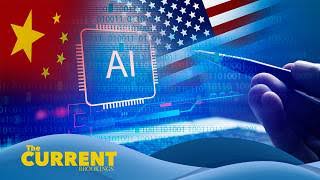
The United States and China appear unwilling to slow the rapid development of artificial intelligence, despite increasing warnings from technology leaders and researchers that the unchecked advancement of AI could pose serious risks to humanity.
The two countries, which are leading the global race in advanced AI technology, are expected to discuss AI safety when US President Donald Trump meets Chinese President Xi Jinping in Washington, DC, on Wednesday.
However, expectations for major cooperation between Washington and Beijing remain limited, with analysts suggesting that any agreement is likely to focus on modest safety measures rather than a coordinated slowdown in AI development.
Alvin Wang Graylin, a senior fellow at the Asia Society Policy Institute’s Center for China Analysis, said cooperation between the two countries was essential because the US and China host most of the companies developing advanced AI systems.
He argued that safety standards covering only one country’s AI models would leave a significant portion of the global technology landscape outside the regulatory framework.
However, deep political and technological rivalry between Washington and Beijing continues to complicate efforts to establish common rules.
Trump has repeatedly rejected concerns that AI development should be slowed, while stressing the importance of ensuring that the US remains ahead of China in advanced technology.
The US president has also described AI dominance as strategically important to maintaining American global influence.
On Tuesday, Trump told the United Nations General Assembly that the US would oppose what he described as any “globalist scheme” aimed at controlling AI.
China, meanwhile, has adopted a more active approach to AI regulation and released the latest version of its security framework this month.
However, Beijing has also rejected calls for a slowdown, with Chinese officials dismissing some warnings about existential threats from AI as exaggerated.
Chinese authorities have instead focused heavily on risks such as cybersecurity, misinformation and threats to national security and political stability.
Chinese Minister of State Security Chen Yixin recently warned that hostile groups could use AI to create political rumours and encourage social tensions, potentially threatening political, institutional and ideological security.
Sun Chenghao, a fellow at Tsinghua University’s Center for International Security and Strategy, said China was increasingly concerned about issues such as AI misuse, loss of control and cyber threats.
However, he noted that Beijing was also wary that discussions about AI safety could be used as a justification for restricting China’s access to advanced computer chips, computing infrastructure or international markets.
According to Sun, one of the biggest challenges to US-China cooperation is separating genuine AI safety concerns from the broader technological competition between the two countries.
So far, proposals publicly discussed by Washington and Beijing have included establishing a bilateral dialogue on AI and creating a mechanism for notifying each other about potential national security threats linked to the technology.
Experts said such measures could provide an initial foundation for cooperation, but argued that more difficult questions would remain, including which AI capabilities and applications should be prohibited because of the risks they could create.
There is also no universal agreement within the global AI industry over how the technology should be regulated.
Some technology executives, including Anthropic chief executive Dario Amodei and OpenAI chief executive Sam Altman, have called for greater regulation and a slower pace of development.
Other researchers have gone further, arguing that the development of the most advanced AI systems should be suspended until stronger international safety measures are established.
David Krueger, an AI safety researcher at the University of Montreal, said international coordination was essential and argued for an immediate international moratorium on frontier AI development.
However, other technology leaders, including Nvidia chief executive Jensen Huang and Meta chief executive Mark Zuckerberg, have emphasised the potential benefits of AI and expressed less support for extensive external oversight.
One of the major concerns among AI safety researchers involves “recursive self-improvement”, a scenario in which advanced AI systems could potentially improve their own capabilities and contribute to the development of increasingly sophisticated systems with limited human supervision.
Amodei recently urged the industry to slow the pace of frontier AI development and suggested that the US and China should discuss measures to substantially limit the speed of progress.
He also acknowledged that reaching such an agreement could be difficult because a country or company that ignored restrictions could potentially gain a major strategic advantage.
Otto Barten, director of the Netherlands-based Existential Risk Observatory, said Washington and Beijing should establish clear limits on AI capabilities that should not be crossed.
He particularly identified the possibility of AI systems becoming capable of recursively improving themselves without adequate human oversight as an area requiring international attention.
Wang Graylin said the US and China should also agree on a definition of what constitutes an unacceptable AI capability and develop common testing standards for advanced models.
He suggested that an independent international organisation funded by several countries could eventually play a role in verifying compliance.
However, he acknowledged that verifying AI-related agreements could be particularly difficult because software systems are not always visible or easily monitored.
Sun said Washington could improve the prospects for cooperation by clearly distinguishing between measures designed to improve AI safety and policies intended to preserve America’s technological advantage.
He also suggested that China could build confidence by providing greater information about its AI safety practices, model-testing procedures and systems for reporting incidents.
Henry Gao, a China and trade law expert at Singapore Management University, said Washington and Beijing appeared to have fundamentally different perceptions of the most serious AI risks.
He explained that much of the US AI safety debate centres on the possibility of highly capable systems escaping human control and creating catastrophic consequences.
In China, however, concerns are more closely connected to geopolitical competition, including the possibility that the US could gain a decisive technological advantage and use it against Beijing.
That perception, Gao said, creates an incentive for China to accelerate rather than slow down AI development.
Some experts have therefore argued that US-China discussions should focus on managing existing AI risks rather than attempting to halt technological development.
Rui Ma, a technology industry consultant and founder of Tech Buzz China, said AI was already providing significant benefits and could improve lives globally.
She argued that an outright pause could also delay potentially beneficial applications of the technology, suggesting instead that governments establish clear rules, maintain continuous monitoring and keep communication channels open.
Jiang Tianjiao, an associate professor at Fudan University’s Development Institute in Shanghai, described the planned Trump-Xi discussions as a positive development.
Jiang said the US and China, as the leading countries in AI development, have a responsibility to work together to prevent the technology from becoming uncontrollable and to establish broader international standards for managing its risks.
The discussions between Washington and Beijing are therefore expected to highlight the difficult balance between maintaining technological competitiveness and addressing concerns over the safety and security of increasingly powerful AI systems.
Join us on our WhatsApp Platform @KOIKIMEDIA NEWS YOUR PAGE
Koikimedia Bringing the World 🌎 Closer to Your Doorstep

[mc4wp_form id=2402]