Physical Address
304 North Cardinal St.
Dorchester Center, MA 02124
Physical Address
304 North Cardinal St.
Dorchester Center, MA 02124

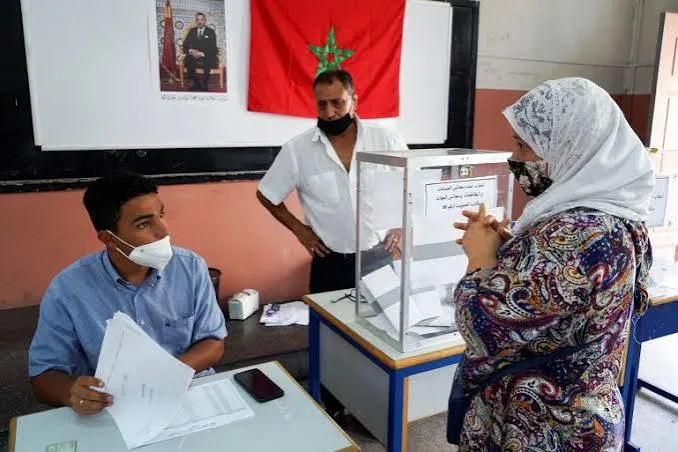
Moroccans have begun voting in parliamentary elections on Wednesday, with the cost of living, unemployment and inequality among the major issues influencing the campaign.
Polling stations opened at 8 a.m. local time and were scheduled to close at 7 p.m., with preliminary results expected to be released overnight.
Nearly 16 million registered voters are eligible to elect 395 members of Morocco’s House of Representatives.
At a polling station in a school in central Rabat, several voters arrived shortly after voting began.
One 42-year-old voter, who requested anonymity, said he went to the polling station hoping that the election would lead to improvements in the country.
Voter turnout, particularly among young people, is being closely watched during the election. Only about four per cent of registered voters are between the ages of 18 and 24.
Under Morocco’s political system, the King appoints the Prime Minister from the party that wins the largest number of seats in parliament.
The Prime Minister then forms a government that serves a five-year term, although the monarch retains significant powers over major policy areas.
Economic pressures, including rising unemployment, higher prices and inequality, have featured prominently in the campaign, alongside concerns over public confidence in political parties.
The election comes less than two months after a large movement of mainly young Moroccan migrants into the neighbouring Spanish enclave of Ceuta, an incident that increased tensions between Morocco and Spain.
However, the issue has not dominated the election campaign, with political parties largely focusing on their proposals to improve living standards.
RNI Seeks Another Term
Opinion polling is prohibited under Morocco’s electoral law, but political observers have identified the National Rally of Independents (RNI), which currently leads the governing coalition, as one of the major parties competing for seats.
Prime Minister Aziz Akhannouch campaigned for the RNI, although he has resigned as the party’s leader.
This means he would not be eligible to head the next government if the party secures the largest number of seats.
Akhannouch has defended his administration’s record, pointing to measures including the expansion of social security coverage, reforms in education and healthcare and salary increases.
He has also pledged that the RNI would continue implementing reforms if returned to government.
However, the Prime Minister has faced allegations of conflicts of interest linked to his business interests in Afriquia, one of Morocco’s leading fuel distribution companies.
His administration has also faced criticism from a youth-led protest movement calling for improved healthcare and education services and demanding changes in government policy.
PAM Challenges RNI
The Authenticity and Modernity Party (PAM) is among the RNI’s main competitors.
Both parties occupy the centre-right of Morocco’s political landscape and have historical links to figures associated with the royal establishment.
PAM has brought Budget Minister Fouzi Lekjaa into its campaign. Lekjaa is also widely known for his role as president of the Royal Moroccan Football Federation.
He has campaigned on improving economic opportunities for young people, promising better wages and stronger purchasing power.
However, PAM has faced questions over its leadership structure. Another prominent party figure is Fatima Ezzahra Mansouri, the Minister for Territorial Planning and Mayor of Marrakesh.
If appointed, she could become Morocco’s first female Prime Minister.
The party has also been affected by a corruption-related controversy involving two of its senior members. In June, a court sentenced the two officials to 10 and 12 years in prison respectively in a major drug-trafficking case referred to as the “Escobar of the Sahara.”
Other parties contesting the election include Istiqlal, a right-wing party led by Equipment Minister Nizar Baraka, which has placed social issues at the centre of its campaign.
The opposition Justice and Development Party, an Islamist political party led by former Prime Minister Abdelilah Benkirane, has focused its campaign on tackling corruption.
The party has also opposed proposals concerning inheritance equality and the decriminalisation of consensual sexual relations outside marriage.
The election is expected to determine the composition of Morocco’s next parliament and influence the formation of the country’s next government.
Join us on our WhatsApp Platform @KOIKIMEDIA NEWS YOUR PAGE
Koikimedia Bringing the World 🌎 Closer to Your Doorstep

[mc4wp_form id=2402]