Physical Address
304 North Cardinal St.
Dorchester Center, MA 02124
Physical Address
304 North Cardinal St.
Dorchester Center, MA 02124

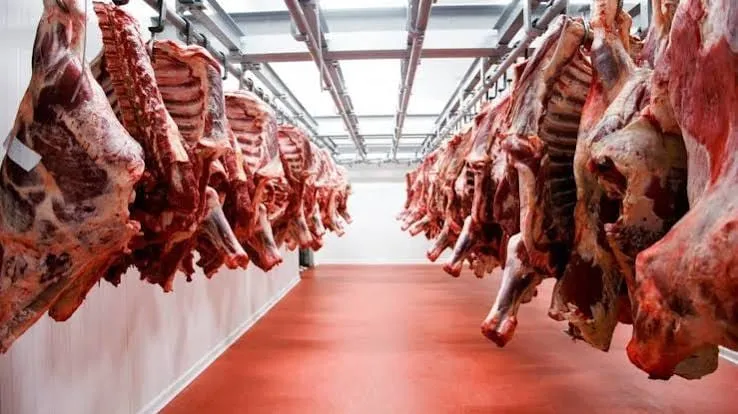
The Federal Government has announced plans to end the slaughtering of livestock in uncontrolled environments across the country as part of efforts to modernise Nigeria’s red meat industry.
The Minister of Livestock Development, Idi Maiha, disclosed this on Thursday in Kaduna at the launch of Olam Agri’s TruValue Cattle Feed, a concentrate feed for beef and dairy production.
Maiha said the government had begun developing modern abattoirs and would require livestock meant for slaughter to pass through feedlots and comply with prescribed standards.
He said the measure was aimed at improving meat quality, traceability and hygiene while positioning Nigeria to take advantage of opportunities in the international red meat market.
“We are going to sustain the tempo to ensure that in the not too distant future, we will stop trading in live animals, and every slaughtered animal in this country must be done under the controlled environment of a modern abattoir,” the minister said.
According to him, the government had conducted groundbreaking ceremonies for two abattoirs and a mini abattoir in the Offa axis of Kwara State.
He added that an abattoir under construction in Abuja would have the capacity to process 1,000 bulls and 3,000 small ruminants daily.
Maiha said the government would also promote the development of feedlots, meat-processing facilities and cold-chain infrastructure to improve the livestock value chain.
He said livestock, including cattle, sheep, goats, pigs and camels, would be required to pass through regulated feedlots before slaughter.
“For them to meet the specification, these animals will have to pass through a feedlot, whether it’s a ram, a goat, a pig, a camel, or a bull.
Standards have to be introduced, and this will be enforced,” he said.
The minister identified inadequate access to quality and affordable animal feed as one of the major challenges affecting livestock productivity in Nigeria.
He also linked feed shortages to the farmer-herder crisis, saying year-round availability of fodder, crop residue and concentrate feeds was necessary to improve livestock production and reduce pressure on grazing resources.
“Feed remains one of the most significant constraints to livestock productivity in Nigeria. It is undoubtedly at the root cause of the current farmer-herder crisis in this country,” Maiha said.
He said improved feeding could increase the weight of animals, shorten finishing periods and improve farmers’ profitability.
Maiha further disclosed that Nigeria had attracted potential buyers of red meat from the Gulf region, the Middle East and Egypt.
He said the country needed to improve production and quality standards to take advantage of the export opportunities.
“Today we have a lot of offtakers waiting for Nigerian red meat. I have met several potential offtakers from the Gulf, from the Middle East, including Egypt,” he said.
The minister said the National Livestock Growth Acceleration Strategy, approved by the National Economic Council, was designed to increase the livestock sector’s contribution to the economy from $32bn to $74bn within 10 years.
He added that the proposed Nigerian Livestock Economic Advancement Programme, N-LEAP, would bring producers, financiers, insurers, breeders, aggregators and marketers into an integrated livestock ecosystem.
Maiha also clarified that the Federal Government’s Livestock Development Centres would not involve the compulsory acquisition of land from states or communities.
He said states would determine the livestock value chains suitable for their ecological zones and voluntarily provide land after consultations with stakeholders.
“No government, nobody, least of all under this present regime, is going to take land from anybody. The states decide what they want to do,” he said.
Representing Kaduna State Governor, Uba Sani, the Special Assistant on Land Resources, Umar Ismail, said Olam Agri’s investment could help transform the cattle-feed industry and contribute to the development of Nigeria’s livestock sector.
Ismail said the company had invested $150m in Nigeria since entering the feed business nine years ago, with operations covering poultry and fish feed production.
He said the cattle sector remained largely traditional and required greater investment and modernisation.
Earlier, Olam Agri’s Vice President, Agriculture, Sameer Wadhera, said Nigeria would need significantly more beef and milk by 2050 because of its projected population growth.
Wadhera said Nigeria had about 24 million cattle, making it the country with the largest cattle herd in West Africa and the fourth-largest in Africa.
He said Nigeria’s population was projected to approach 400 million by 2050, creating increased demand for animal protein.
“We will need a minimum of 115 per cent more beef in the country, 575 per cent more milk in the country,” Wadhera said.
Join us on our WhatsApp Platform @KOIKIMEDIA NEWS YOUR PAGE
Koikimedia Bringing the World 🌎 Closer to Your Doorstep

[mc4wp_form id=2402]