Physical Address
304 North Cardinal St.
Dorchester Center, MA 02124
Physical Address
304 North Cardinal St.
Dorchester Center, MA 02124

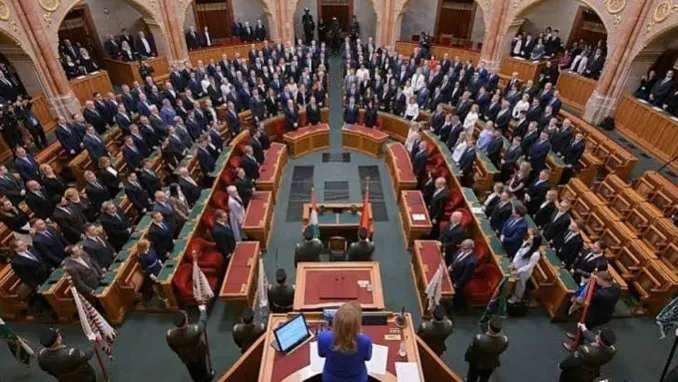
The United States House of Representatives has approved a 50 per cent reduction in assistance to Nigeria, citing concerns over the federal government’s response to violence targeting Christian communities.
The decision was contained in the National Security, Department of State, and Related Programs (NSRP) Appropriations Bill, which was passed by the House on Wednesday.
The bill provides a total discretionary allocation of $47.32 billion, representing a $2.69 billion, or six per cent, reduction from the FY2026 enacted level.
According to the legislation and its accompanying committee report, half of US assistance to Nigeria would be withheld until the Secretary of State certifies that the Nigerian government has taken measurable steps to protect Christian communities affected by religiously motivated violence.
The committee cited the Palm Sunday massacre and expressed concern over what it described as the continued violence in Nigeria, urging Abuja to ensure that perpetrators are brought to justice.
Congressman Riley M. Moore, who sponsored the provisions, said the measure was designed to address what he called the “horrific violence, murder, and persecution” of Christians in Nigeria.
“Christians in Nigeria continue to endure horrific violence, murder, and persecution while a majority of the world turns a blind eye to their suffering,” Moore said.
“This bill sends a clear message that the United States will continue to stand with persecuted Christians across the globe, especially in Nigeria.”
The House Appropriations Committee also directed that funds from the Security Sector Programme/National Security account be used to tackle attacks by Fulani ethnic militias and broader insecurity in the Middle Belt region, which has experienced repeated killings and displacement.
The committee further mandated the Secretary of State to assess and report to Congress whether the Nigerian government was taking steps to facilitate the safe return of internally displaced persons to their ancestral lands.
The assessment would form part of the requirements for the release of the withheld aid.
The legislation also requires the State Department to submit reports to Congress within 45 to 60 days detailing measures being taken to end attacks against Christians and promote accountability for religious freedom violations.
An additional $2 million was allocated under the International Narcotics Control and Law Enforcement account for atrocity prevention, with part of the funding targeted at addressing violence linked to Fulani militias in the Middle Belt.
The committee also called for stronger partnerships with Nigerian law enforcement agencies to improve professionalism, capacity and accountability in tackling insecurity.
It further directed the Secretary of State to consider the impact of Nigeria’s blasphemy laws on religious freedom in the annual International Religious Freedom Report.
“The Committee supports the renewed focus of the Secretary of State on confronting the persecution of Christians worldwide, including in Nigeria, the Middle East, and Western Europe,” the report stated.
It added that humanitarian assistance should be made available to vulnerable and persecuted religious minorities, including victims of genocide and groups affected by crimes against humanity and ethnic cleansing.
The legislation also included provisions restricting funds for “irresponsible migration” and ending funding for the US Agency for Global Media.
On global health, the bill promotes the “America First Global Health Strategy” by reducing US contributions as partner countries assume greater responsibility.
It also provides $6.75 billion for the Foreign Military Financing Programme while retaining pro-life protections, including the Helms, Kemp-Kasten, Siljander, Tiahrt and Hyde-Lantos amendments.
Reacting to the passage of the bill, Moore said the legislation would ensure that US assistance to Nigeria was tied to measurable progress in protecting Christians and addressing insecurity.
“The bill conditions US assistance to Nigeria on tangible progress in protecting Christians, particularly in addressing the threat posed by Fulani terrorists and returning internally displaced people to their ancestral lands,” he said.
He added that the bill would support training and accountability for Nigerian police forces while advancing President Donald Trump’s “America First” foreign policy.
On the House floor, Rep. Greg Steube accused the Nigerian government of failing to adequately address violence in the country, arguing that withholding only half of the funding was necessary to ensure accountability.
He said the amendment did not introduce new conditions but strengthened existing requirements tied to US assistance.

[mc4wp_form id=2402]