Physical Address
304 North Cardinal St.
Dorchester Center, MA 02124
Physical Address
304 North Cardinal St.
Dorchester Center, MA 02124

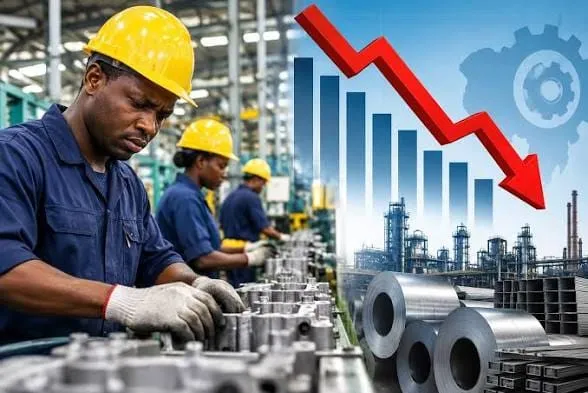
Nigerian workers are increasingly facing uncertainty over job security as manufacturers struggle with rising production costs, high electricity tariffs, multiple taxation, expensive loans and difficulties accessing foreign exchange for essential production materials.
The growing financial burden on businesses is threatening industrial stability, limiting investment and making it increasingly difficult for companies to sustain existing operations, expand production and retain their workforce.
The Chemical and Non-Metallic Products Employers Federation (CANMPEF) raised the concerns in its Secretariat’s report presented by its Executive Secretary, Olorunfemi Oke, at the Federation’s 46th Annual General Meeting (AGM) in Lagos.
The report identified rising electricity costs, unreliable power supply, overlapping tax obligations, high borrowing rates and foreign exchange challenges as major obstacles confronting manufacturers in the country.
According to the Federation, the difficult operating environment has continued to increase production expenses, reduce operational efficiency and weaken the competitiveness of locally manufactured products.
It noted that electricity remains a critical component of manufacturing, particularly for energy-intensive industries such as chemical processing and the production of non-metallic products.
However, the high cost of electricity and unreliable public power supply have forced many manufacturers to depend on alternative sources of energy, further increasing their operational expenses.
The Federation explained that inconsistent electricity supply also disrupts production schedules, raises manufacturing costs and makes locally produced goods less competitive.
It therefore called for more predictable electricity tariffs, improved service delivery and greater transparency in the relationship between electricity charges and the quality of power supplied to manufacturers.
On taxation, CANMPEF expressed concern over the multiple levies, overlapping tax requirements and complicated compliance procedures imposed on businesses by different levels of government.
It warned that the situation increases the cost of doing business and diverts funds that could otherwise be channelled into factory expansion, equipment upgrades, productive investments and workforce development.
The Federation called for improved coordination among tax authorities, clearer guidelines on tax obligations and a more transparent administration of tax policies.
The high cost of accessing finance was also identified as a major challenge, with manufacturers finding it increasingly difficult to obtain affordable loans to maintain operations, purchase machinery and modernise production facilities.
CANMPEF observed that prevailing high interest rates had significantly increased borrowing costs, particularly for businesses requiring substantial investments in equipment, imported raw materials, inventory and compliance with technical standards.
It stressed that access to affordable and predictable financing was essential for manufacturers seeking to maintain production capacity and undertake new investments.
The Federation also highlighted persistent foreign exchange challenges, explaining that manufacturers continued to experience difficulties obtaining foreign currency to import essential raw materials, machinery, spare parts and specialised production inputs.
According to the report, exchange rate fluctuations and uncertainties surrounding access to foreign exchange have complicated procurement processes, financial planning and production schedules.
Delays in import documentation, customs clearance and other regulatory procedures have also increased transaction costs and extended production timelines.
CANMPEF further identified inadequate local sourcing capacity as another challenge affecting the manufacturing sector.
Although local sourcing could reduce manufacturers’ dependence on foreign exchange and strengthen domestic industrial development, the Federation noted that limitations in the availability, quality and consistency of locally produced raw materials continued to affect the sector.
Poor transportation and logistics infrastructure, unreliable electricity and inadequate supporting industrial facilities have also made it difficult for manufacturers to develop stronger domestic supply chains.
Although the report did not provide specific figures on job losses or retrenchments, the Federation’s concerns have raised questions about the ability of manufacturing companies to sustain employment amid increasing operational costs.
The challenges have also heightened concerns about the capacity of businesses to protect existing jobs while maintaining production standards, meeting market demands and fulfilling their financial obligations.
As part of its advocacy priorities for 2026, CANMPEF disclosed plans to engage the Nigerian Electricity Regulatory Commission (NERC), electricity distribution companies and other relevant authorities over the cost and reliability of electricity supply.
The Federation also intends to pursue improved coordination and clarity in tax administration to reduce uncertainty and prevent multiple charges on businesses.
On industrial relations, the report disclosed that CANMPEF successfully concluded a two-year industry wage agreement with the National Union of Chemical, Footwear, Rubber, Leather and Non-Metallic Products Employees in 2025.
The agreement, which took effect on April 1, 2025, and will run until March 31, 2027, provides a total monthly salary package of N114,500.
The package comprises N46,800 basic salary, N32,200 housing allowance and N35,500 transport allowance.
The Federation described the agreement as an important framework for maintaining industrial harmony and promoting constructive relationships between employers and workers during the challenging economic period.
It also disclosed that it had continued to assist member companies with collective bargaining, labour law compliance, minimum wage implementation and dispute resolution.
In addition, the organisation conducted training programmes on leadership, regulatory compliance, productivity improvement, occupational health and safety, chemical handling, process safety and environmental compliance.
The Federation maintained that addressing the challenges confronting manufacturers would require coordinated interventions from government, regulatory authorities and other relevant stakeholders.
For employers, the immediate concern remains how to keep factories operational, sustain investments and remain competitive despite rising production expenses.
For workers, however, the survival of their jobs depends largely on the ability of their employers to maintain viable businesses, sustain production and withstand the mounting economic pressures.
Join us on our WhatsApp Platform @KOIKIMEDIA NEWS YOUR PAGE
koikimedia Bringing the World 🌎 Closer to Your Doorstep

[mc4wp_form id=2402]