Physical Address
304 North Cardinal St.
Dorchester Center, MA 02124
Physical Address
304 North Cardinal St.
Dorchester Center, MA 02124

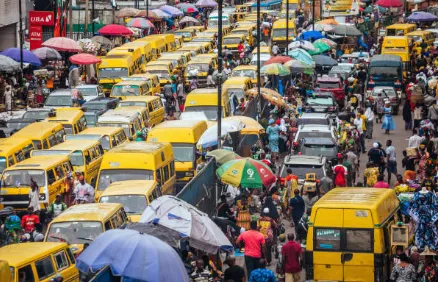
Nigerians have questioned the impact of Nigeria’s economic growth on their daily lives after the country’s Gross Domestic Product (GDP) grew by 4.43 per cent in real terms in the second quarter of 2026, according to the National Bureau of Statistics (NBS).
The NBS, in its GDP report released on Monday, said the growth represented an improvement from the 3.89 per cent recorded in the first quarter of 2026.
The latest figure also marked a 0.20 percentage-point increase from the 4.23 per cent recorded in the second quarter of 2025.
According to the NBS, Nigeria’s nominal GDP stood at N119.29 trillion, while real GDP was estimated at N53.47 trillion during the period under review.
The services sector accounted for the largest share of economic activity at 56.62 per cent, followed by agriculture at 26.15 per cent. The industrial sector contributed 3.96 per cent.
Reacting to the figures, President Bola Ahmed Tinubu described the GDP growth as encouraging and assured Nigerians of stronger economic performance.
The President’s position was contained in a statement issued by his spokesperson, Bayo Onanuga.
However, the GDP figures have sparked reactions on X, with some Nigerians questioning whether the reported growth is translating into improved living conditions and stronger purchasing power.
A Nigerian identified as Lawrence asked whether the improvement in macroeconomic indicators was benefiting small businesses.
“The interesting question is whether the improvement in the macro numbers is translating into better margins for small businesses.
“Nigeria’s Q2 GDP growth was 4.43%, up from 3.89% in Q1. But I’d want to see what happens to operating costs and consumer purchasing power first,” he wrote.
Similarly, another X user, Nwachukwu, criticised the reported economic improvements, saying they had little impact on ordinary Nigerians.
“Churning out statistics that have zero effect on society and the social security of the nation.
“Just wondering what is the essence of your so-called statistical improvements,” he stated.
The latest GDP figures come amid continued complaints by Nigerians over the rising cost of living, despite headline inflation easing to 15.43 per cent in July.
The recent increase in petrol prices to between N1,310 and N1,345 per litre has further heightened concerns over the cost of living and its impact on households and businesses.
Join us on our WhatsApp Platform @KOIKIMEDIA NEWS YOUR PAGE
koikimedia Bringing the World 🌎 Closer to Your Doorstep

[mc4wp_form id=2402]