

Findings by our correspondent suggest the Assembly may move the presidential poll forward to February 13, 2027
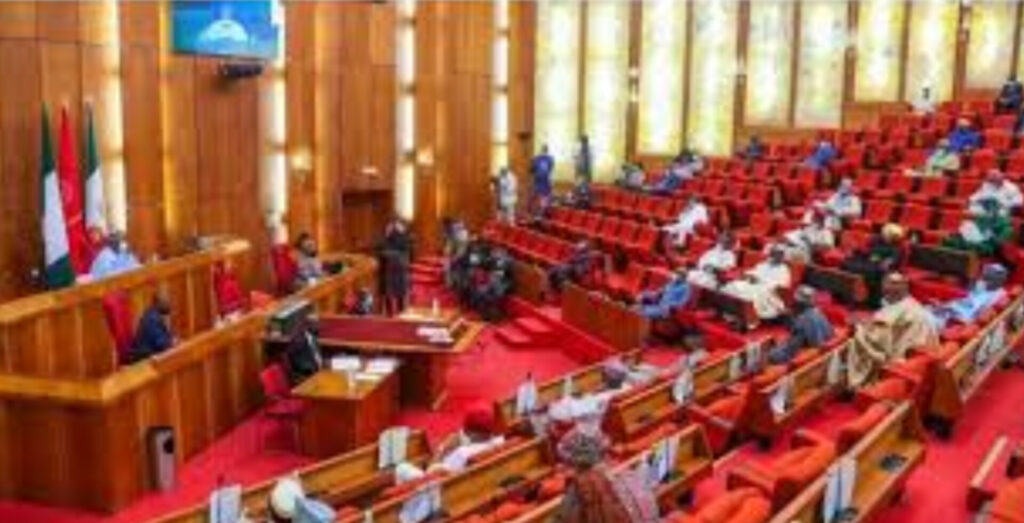
The National Assembly announced on Sunday that it will reconvene its plenary session on Tuesday, February 17, 2026, cutting short its recess amid indications that lawmakers may review the date set for the 2027 presidential election.
Findings by our correspondent suggest the Assembly may move the presidential poll forward to February 13, 2027.
In a notice signed by the Clerk of the National Assembly, Kamoru Ogunlana, senators and members of the House of Representatives were directed to resume sitting at 11:00 a.m. and adjust their schedules, as “very crucial decisions” are expected during the session.
“I am directed to inform all Distinguished Senators and Honourable Members of the National Assembly that the Senate and House of Representatives shall reconvene plenary session at 11:00 a.m. on Tuesday, 17th February 2026, respectively,” the notice stated.
“Consequently, all Distinguished Senators and Honourable Members are kindly requested to take note and reschedule their engagements accordingly to enable them attend the session, as very crucial decisions shall be taken by each Chamber during the session,” Ogunlana added.
However, sources within the National Assembly, speaking on condition of anonymity, revealed that the public notice masks a more pressing agenda.
“It is an extraordinary plenary session to review the 2027 presidential election date as stipulated in the Electoral Act amendment.
That is why our recess has been cut short,” a senator confided.
“The ultimate aim is to provide legislative backing to INEC’s request to address concerns over the 2027 election, which is currently scheduled during Ramadan,” the lawmaker added.
Another Senate insider indicated that, if approved, the presidential poll may be moved from February 20 to February 13.
A Senate source further emphasized the session’s significance, stating: “It is about more than dates it is about ensuring every Nigerian, regardless of faith, has a fair opportunity to participate.
The decisions we take could define the credibility of the 2027 elections.”
This development comes barely a week after the Senate approved electronic transmission of election results to the Independent National Electoral Commission’s (INEC) Result Viewing Portal, while retaining manual collation as a backup in areas with network challenges.
The emergency reconsideration stems from a disputed clause in the Electoral Act (Repeal and Re-enactment) Amendment Bill, 2026, which triggered nationwide protests and criticism from opposition parties, civil society, and youth movements.
Under the revised provision, presiding officers at polling units must electronically transmit results to the IReV portal after voting concludes and documentation is completed.
Where electronic transmission is not feasible, the manual result sheet (Form EC8A) will serve as the primary basis for collation.
Senate President Godswill Akpabio, while putting the motion to a voice vote, urged senators opposed to the amendment to formally challenge it on the floor.
With plenary set to resume, lawmakers are expected to continue deliberations on pending bills, committee reports, and further work on the Electoral Act amendment ahead of the 2027 polls.
Meanwhile, the Joint National Assembly Conference Committee, tasked with reconciling differences in the Electoral Amendment Bill passed separately by both chambers, is scheduled to meet on Monday.
The harmonized bill will then be sent to President Bola Tinubu for assent.
INEC has acknowledged public concerns over the timing of the 2027 elections, which coincide with Ramadan, a period of fasting and spiritual reflection for millions of Nigerian Muslims.
The commission indicated it may seek legislative intervention if necessary.
The National Commissioner and Chairman of INEC’s Information and Voter Education Committee, Mohammed Haruna, stated that the election timetable complies with the Constitution, the Electoral Act 2022, and INEC guidelines. Initially, INEC had slated February 20, 2027, for the presidential and National Assembly elections, and March 6, 2027, for governorship and state assembly elections.
However, Muslim rights groups and other stakeholders criticized the proposed timetable as insensitive, prompting calls for a review.
Former presidential candidate Atiku Abubakar and former presidential aide Bashir Ahmad highlighted the challenge of holding elections during Ramadan, noting it may limit participation.
The Joint National Assembly Conference Committee is expected to reconcile Senate and House versions of the Electoral Amendment Bill, paving the way for a legal framework that accommodates both the election timing and electronic transmission.
On the exclusion of the “real-time” clause for electronic transmission, the Senate cited inadequate power and internet infrastructure.
Senate Leader Opeyemi Bamidele noted that Nigeria’s broadband coverage in 2025 was 70 per cent, with internet penetration at 44.53 per cent, and average fixed broadband speed at 33.32 Mbps—far below global standards.
He added that 43 per cent of Nigerians still lack access to grid electricity, making real-time electronic transmission impractical.
Clause 60(3) of the Electoral Act was thus made discretionary, while Section 62(2) maintains the National Electronic Register of Election Results.
Join us on our WhatsApp Platform @KOIKIMEDIA NEWS YOUR PAGE
koikimedia Bringing the World 🌎 Closer to Your Doorstep