Physical Address
304 North Cardinal St.
Dorchester Center, MA 02124
Physical Address
304 North Cardinal St.
Dorchester Center, MA 02124

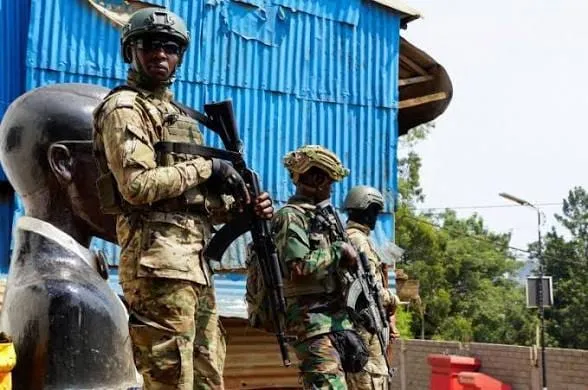
Diplomatic efforts to end the prolonged conflict in the eastern Democratic Republic of the Congo (DRC) have failed to halt renewed fighting, as civilians continue to face killings, displacement and disruption of essential services.
Fighting between the Congolese armed forces and armed groups in North and South Kivu provinces has persisted despite peace initiatives facilitated by the United States and Qatar.
Residents of the affected communities say the negotiations have yet to produce meaningful improvements in security, with many families continuing to lose their homes and loved ones.
Blaise Chasumba, a resident of Bukavu, the capital of South Kivu, said repeated diplomatic meetings had done little to change conditions on the ground.
He said civilians were still bearing the consequences of the conflict despite assurances from the parties involved that peace was being pursued.
The Washington Accords, signed in December 2025, were designed to address tensions between the DRC and neighbouring Rwanda, while the Doha peace process seeks to resolve the conflict between the Congolese government and the Congo River Alliance (AFC), which includes the Rwanda-backed M23 armed group.
The Doha Framework for a Comprehensive Peace Agreement was signed by the Congolese government, AFC and M23 on November 15, 2025.
In August 2026, representatives of the parties, alongside Qatar, the United States, Togo, the African Union Commission and Switzerland, agreed on a roadmap to advance negotiations and establish a mechanism to monitor implementation.
However, renewed fighting has raised concerns about the effectiveness of the agreements.
The situation became more complicated in October 2026 following the establishment of the Front for the Refoundation of the Nation (FRN), a political and armed coalition led by former Congolese President Joseph Kabila.
The coalition claims to have succeeded the AFC and assumed its commitments.
In early November, FRN fighters reportedly advanced through Kahuzi-Biega National Park and along National Road 3, a strategic route linking Bukavu with areas farther north.
Conflict monitoring reports indicated that the fighters captured several communities, including Bitale and the centre of Bulambika, on November 8.
The Congolese army, however, said it had stopped the advance at Bulambika and was preparing a counteroffensive to recover lost positions.
The renewed violence has also worsened the humanitarian situation, forcing more residents to flee their communities.
Médecins Sans Frontières (MSF), also known as Doctors Without Borders, said it had reduced its staff presence in the Bunyakiri health zone because of deteriorating security conditions.
The organisation relocated some personnel to Bitale and Bukavu while calling on all parties to protect healthcare facilities, civilians and humanitarian workers in line with international humanitarian law.
Meanwhile, the Congolese armed forces, known by their French acronym FARDC, have accused the Rwandan military and fighters allied with the FRN of carrying out recent attacks in North and South Kivu.
Rwanda has denied supporting armed groups in eastern DRC, citing the presence of the Democratic Forces for the Liberation of Rwanda (FDLR) as a security threat.
The dispute over the activities of armed groups in the region remains a major source of tension between both countries.
In February 2025, the United Nations Security Council condemned the M23 offensive and cited direct support and participation by the Rwanda Defence Force.
It called on Rwanda to end its support for the group and withdraw its forces from Congolese territory.
The council also condemned support provided by Congolese forces to armed groups, particularly the FDLR, and called for the group’s neutralisation.
The African Union (AU) has also expressed concern over the slow implementation of the peace agreements.
In a communiqué issued after its Peace and Security Council meeting on October 26, the organisation said progress under the Washington and Doha processes remained limited.
It called for better coordination between the two initiatives and urged an inclusive, nationally led dialogue involving women, young people and civil society organisations.
Similarly, Dieumerci Mungu Akonkwa, North Kivu coordinator of Action for Democracy and Development in the Congo, said the negotiations had failed to deliver tangible improvements for civilians.
He called for a broader national dialogue involving political leaders and civil society groups, pointing to proposals previously presented by Catholic and Protestant church leaders.
The conflict in eastern DRC has persisted for decades, with its roots linked to the 1994 Rwandan genocide, the Congo wars and longstanding disputes over land, citizenship, political representation and natural resources.
M23 emerged in 2012 following a mutiny by former members of the National Congress for the Defence of the People (CNDP), who accused the Congolese government of failing to implement a 2009 peace agreement.
Residents of the affected communities have continued to call for an end to the fighting, the restoration of essential services and compensation for losses suffered during the conflict.
Join us on our WhatsApp Platform @KOIKIMEDIA NEWS YOUR PAGE
Koikimedia Bringing the World 🌎 Closer to Your Doorstep

[mc4wp_form id=2402]