Physical Address
304 North Cardinal St.
Dorchester Center, MA 02124
Physical Address
304 North Cardinal St.
Dorchester Center, MA 02124

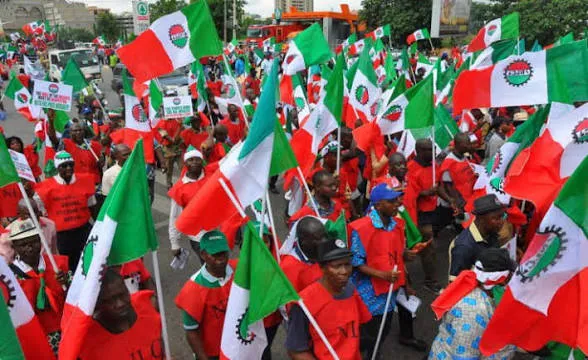
Public sector workers across Nigeria have commenced a three-day warning strike over what labour unions described as worsening economic hardship and the Federal Government’s failure to address their demands.
The industrial action, being coordinated under the Joint National Public Service Negotiating Council (JNPSNC), covers workers in federal, state and local government services, including employees of ministries, departments and agencies.
The strike is scheduled to run from midnight on Friday, October 2, to Sunday, October 4, 2026.
The JNPSNC directed its affiliated unions and officials nationwide to ensure full compliance with the action, saying the economic and psychological pressures facing workers and other Nigerians had become increasingly difficult to bear.
The council comprises several public sector unions, including the Nigerian Civil Service Union, Medical and Health Workers Union, Association of Senior Civil Servants of Nigeria, National Association of Nigerian Nurses and Midwives, and other unions representing workers in the public service.
Why workers are striking
The warning strike followed the Federal Government’s failure to respond to demands contained in a September 21, 2026 letter addressed to President Bola Ahmed Tinubu by the JNPSNC.
Among the major demands are a reduction in the pump price of petrol to N500 per litre, the immediate introduction of a wage award for workers and the commencement of negotiations for a new national minimum wage ahead of 2027.
The council had given the Federal Government until September 30 to address the issues, warning that failure to do so would trigger the three-day industrial action.
The unions said their expectations were not met in President Tinubu’s Independence Day address on October 1.
In a circular dated October 1 and signed by the JNPSNC National Secretary (Trade Union side), Olowoyo Gbenga, the council directed workers at the federal, state and local government levels to join the strike.
The council said the action was necessary because workers, their dependants and vulnerable Nigerians were facing severe economic difficulties.
Petrol price reduction demanded
The JNPSNC is demanding that the Federal Government take urgent measures to reduce the price of Premium Motor Spirit (PMS), commonly known as petrol, to N500 per litre.
The council proposed government intervention to address landing costs and support operators in the oil and gas sector.
It also called for crude oil to be supplied to the Dangote Refinery and modular refineries on appropriate terms to encourage domestic refining and reduce the cost of petroleum products.
According to the council, petrol prices ranging from about N1,450 to N2,000 per litre, and reportedly as high as N2,500 in some locations, have placed additional pressure on workers and households.
Labour demands wage award
The public sector unions also want the Federal Government to approve an immediate wage award to cushion workers against the effects of rising living costs.
The JNPSNC said the measure would help protect workers’ purchasing power and enable public servants to maintain their commitment and productivity.
The council also called for the immediate establishment of a tripartite committee to begin negotiations for a new national minimum wage expected to take effect in 2027.
It said early commencement of negotiations would help prevent delays in reaching an agreement and implementing the new wage when it is eventually enacted.
NLC backs workers’ demands
The Nigeria Labour Congress (NLC) has also criticised the rising cost of living and called for measures to reduce the burden on workers and households.
In an Independence Day statement, NLC President Joe Ajaero cited rising petrol prices, inflation, unemployment, stagnant wages and insecurity as major challenges confronting Nigerians.
The labour centre said the purchasing power of workers had been significantly weakened by inflation, while rising transportation costs had contributed to higher prices of food, rent, school fees and other essential goods and services.
The NLC called for an immediate reduction in petrol prices, describing transportation costs as a major channel through which inflation affects households.
It also demanded the immediate implementation of a nationwide wage award for workers in the federal, state and local governments.
The union further called for the implementation of tax relief measures contained in the October 2023 agreement between the Federal Government and organised labour.
Minimum wage talks
The NLC also called for the immediate establishment of a tripartite committee to negotiate a new national minimum wage ahead of 2027.
It argued that the current N70,000 minimum wage had lost significant purchasing power because of inflation.
The labour centre also called for a reduction in the cost of governance, greater transparency in the management of public resources and increased economic opportunities for young Nigerians.
On insecurity, the NLC said violence in parts of the country was worsening economic conditions and putting farmers, teachers and healthcare workers at risk.
The union maintained that insecurity, poverty, unemployment and inequality were interconnected challenges requiring coordinated government action.
The three-day warning strike is therefore expected to affect public services across the federal, state and local government levels between October 2 and October 4, 2026.
Join us on our WhatsApp Platform @KOIKIMEDIA NEWS YOUR PAGE
Koikimedia Bringing the World 🌎 Closer to Your Doorstep

[mc4wp_form id=2402]