Physical Address
304 North Cardinal St.
Dorchester Center, MA 02124
Physical Address
304 North Cardinal St.
Dorchester Center, MA 02124

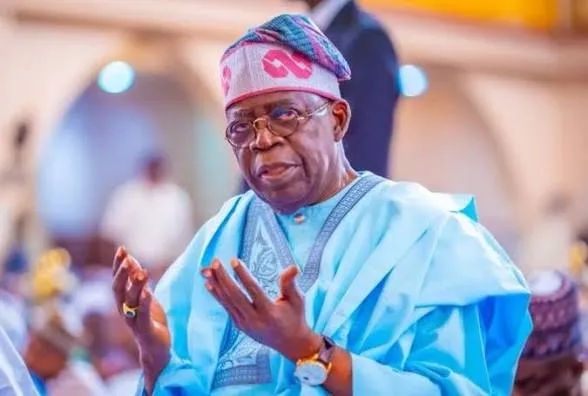
President Bola Ahmed Tinubu has defended the economic reforms introduced by his administration, saying the measures did not create Nigeria’s longstanding economic problems but were designed to address structural weaknesses that had accumulated over several decades.
Tinubu made the assertion on Thursday, October 1, 2026, in his Independence Day address to Nigerians as the country marked its 66th anniversary.
The President said successive administrations had for many years postponed difficult economic decisions, allowing distortions and weaknesses in the economy to deepen and their consequences to be passed from one generation to another.
According to him, the situation had become particularly severe by 2023, with rising poverty and declining public confidence in the country’s economic future.
“By 2023, poverty was rising, and hope was nearly gone. The country’s situation was darker than ever. We had no choice but to act,” Tinubu said.
He compared the state of the Nigerian economy to a patient suffering from cancer, arguing that painful but necessary treatment was required to tackle the underlying problems rather than continue managing their symptoms.
“For too long, Nigeria’s leaders chose morphine while praying for a miracle that never came,” he said.
Tinubu said his administration therefore decided to take a different approach after assuming office, despite the immediate hardship associated with the reforms.
“When this administration assumed office, we resolved to do things differently. We chose to excise the cancer.
The reforms that followed were difficult. The side effects were real. Yet, we must never confuse the medicine with the disease,” he said.
“Our reforms did not create the weaknesses in our economy. They confronted them.”
The President also defended the decision to continue with the reforms despite calls from some Nigerians for a return to what he described as “addictive subsidies.”
Tinubu said Nigerians should remember the reasons the reforms were introduced and consider what he described as improvements recorded in several areas of the economy.
He said that three and a half years into his administration, Nigeria’s economic outlook had improved, pointing to economic growth of more than four per cent and contributions from both the oil and non-oil sectors.
He also cited a reduction in oil theft, a substantial decline in inflation from its peak, the rebuilding of the country’s foreign reserves and greater stability in the foreign exchange market.
According to the President, Nigeria’s non-oil export revenue exceeded $6 billion in 2025.
“These are not idle claims. International observers, journalists, NGOs and multilateral institutions can see the change,” Tinubu said.
He declared that the country had reached a new stage in its economic journey, with the government’s focus shifting from correcting fundamental economic distortions to delivering what he described as “shared and widespread prosperity.”
Tinubu identified the reduction of the cost of living as an immediate priority, saying the government would focus on lowering the cost of producing and transporting goods.
He said the administration was expanding mechanised irrigation and dry-season farming while improving farmers’ access to seeds and fertiliser and increasing agricultural mechanisation.
The President also highlighted investments in storage, transportation and other agricultural infrastructure, saying the government was working to reduce losses and improve the movement of food from farms to consumers.
He said the construction and completion of roads, railways and ports would help connect farms and factories to markets while reducing the cost of transporting goods and services across the country.
Tinubu further identified job creation, enterprise development and industrial expansion as key areas of focus for the administration.
He said the government planned to use Nigeria’s gas resources to power new industries, support businesses seeking to revive factories and expand digital connectivity across the country.
The President added that his administration would invest in skills development to ensure Nigerians had the capabilities required by employers while providing businesses with the infrastructure and financing needed to expand.
He said his vision was to see more Nigerians producing goods locally, Nigerian farms supplying cities and factories and Nigerian businesses exporting their products to international markets.
However, Tinubu acknowledged that millions of Nigerians were still facing difficulties meeting basic needs, including food, school fees, medical expenses and transportation costs.
He argued that the difficulties faced by vulnerable Nigerians did not begin with the reforms introduced during the past three years, but were the accumulated consequences of decades of low productivity, inadequate infrastructure, limited economic opportunities and weak institutions.
“We cannot erase in four years what accumulated over generations. But we can change its course,” he said.
The President said the Federal Government was strengthening direct support for poor households and improving the National Social Register to ensure that government assistance reached Nigerians who genuinely needed it.
He also pointed to the Nigerian Education Loan Fund as an initiative designed to help students from low-income families gain access to higher education.
Tinubu said the Consumer Credit Corporation was also providing working Nigerians with access to credit to acquire vehicles, solar systems, digital devices and other essential assets.
He added that the Federal Government, working with state and local governments, would continue to strengthen primary healthcare, basic education and other essential public services.
The President said salaries and pensions had been paid on time and in full since 2023, while reforms to the national pension system were intended to improve the welfare of retirees and vulnerable Nigerians.
He stressed that the government’s social intervention programmes were not intended to replace prosperity but to provide a bridge for citizens as they worked towards greater economic independence.
“Our objective is not to manage poverty more efficiently. We will defeat it,” Tinubu declared.
The President acknowledged that achieving the objective would require time, discipline, sustained economic growth and the creation of millions of productive opportunities across the country.
He maintained that the administration was pursuing its economic agenda from what he described as a position of strength, arguing that the fundamental direction of the economy had now been corrected.
“The age of reform has done its work. Now begins the age of prosperity,” he said.
Tinubu urged Nigerians to look towards the future with renewed hope, insisting that the country had corrected its economic course.
“Nigeria has corrected its course. We have passed through our own Red Sea. This is not the time to look back. Let us go forward together, with faith in ourselves, faith in our country, and faith that the sacrifices we have made will yield their reward,” he said.
The President described the country’s “Promised Land” as a Nigeria where abundance and opportunity would be widely available and prosperity would be broadly shared.
He said his administration’s ultimate objective was to build a country where every Nigerian child could aspire to a better future regardless of his or her background or circumstances of birth.
“Our destination is in sight. Our foundations are strong. Our direction is clear. So let us go forward. No looking back,” Tinubu said.
Join us on our WhatsApp Platform @KOIKIMEDIA NEWS YOUR PAGE
Koikimedia Bringing the World 🌎 Closer to Your Doorstep

[mc4wp_form id=2402]