Physical Address
304 North Cardinal St.
Dorchester Center, MA 02124
Physical Address
304 North Cardinal St.
Dorchester Center, MA 02124

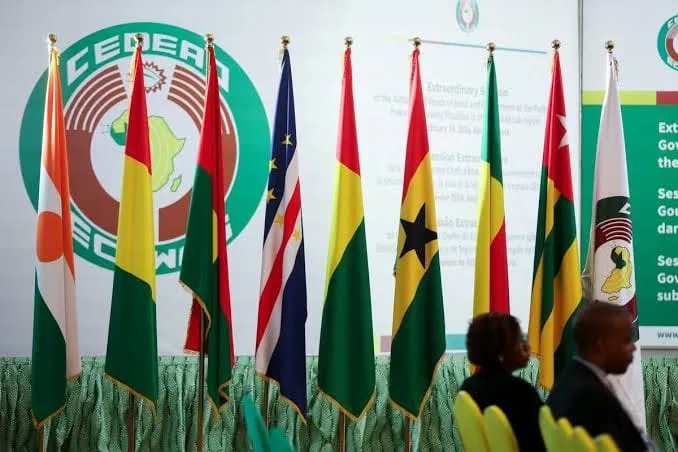
The Economic Community of West African States (ECOWAS) has warned member states against allowing legally acquired arms and ammunition to be diverted for criminal or other unauthorised purposes, stressing that such diversion poses a serious threat to national and regional security.
The warning was issued on Monday in Port Harcourt, Rivers State, during a five-day training programme on physical security, stockpile management and property management for national security in Nigeria.
The programme was organised by the ECOWAS Small Arms Division in partnership with the Bonn International Centre for Conflict Studies.
Speaking at the event, the Acting Head of the ECOWAS Small Arms Division, Abayomi Adeomi, said security agencies must pay as much attention to weapons held in authorised stockpiles as they do to arms being illegally trafficked across borders.
Adeomi explained that while cross-border arms trafficking remained a major concern, weapons could also find their way into criminal hands through theft, poor storage, inadequate record-keeping or diversion from officially authorised stockpiles.
He stressed that effective stockpile management was not merely an administrative responsibility but an important component of national security, conflict prevention and accountable security-sector governance.
According to him, accurate inventory records, regular inspections, safe handling procedures, properly trained personnel and the timely destruction of obsolete or surplus weapons were essential safeguards against theft, loss, diversion and accidental explosions.
Meanwhile, the National Centre for the Control of Small Arms and Light Weapons (NCCSALW) disclosed that it had destroyed more than 17,000 illicit, unserviceable, obsolete and decommissioned weapons, as well as over 20,000 rounds of illicit ammunition, since its establishment in 2021.
The Director-General of the centre, Johnson Kukomo, who was represented by the Zonal Director, South-South, Alex Ebimiebo, said the destruction of the weapons formed part of Nigeria’s broader efforts to prevent the proliferation and illegal circulation of small arms and light weapons.
Kukomo said the Federal Government established the NCCSALW in 2021 to provide a stronger and more permanent institutional framework for combating the proliferation of small arms and light weapons.
Before the establishment of the centre, the responsibility was largely coordinated through the Presidential Committee on Small Arms and Light Weapons, which was inaugurated in 2013.
The NCCSALW, he added, had continued to strengthen the capacity of the armed forces, police, law enforcement agencies and other security institutions in areas such as weapons management, physical security, stockpile control, arms marking and tracking, record-keeping and the identification of illicit weapons.
Ebimiebo said the centre also worked closely with ECOWAS, the Bonn International Centre for Conflict Studies and other development partners on technical assistance, weapons tracing, arms disposal and the implementation of regional and international arms-control agreements.
He noted that international and regional cooperation was essential because the proliferation of illicit weapons was a cross-border problem that could not be effectively tackled by one country or institution alone.
He further explained that proper documentation and the destruction of decommissioned weapons helped ensure that such arms were permanently removed from circulation and reduced the possibility of diversion.
Also speaking at the event, the General Officer Commanding 6 Division of the Nigerian Army, Major General Everest Okoro, warned that poorly managed weapons stockpiles could increase the risk of theft, unauthorised access, diversion, deterioration and accidental explosions.
Okoro, who was represented by the Commander, 6 Division Garrison and Commander, Sector 3, Joint Task Force, South-South Operation Delta Safe, Brigadier General A.A. Bello, said the training had brought together about 20 participants from the Nigerian Army, Nigeria Police Force and other security agencies.
He stressed that disciplined stockpile management was necessary to protect lives and military equipment, strengthen accountability and prevent weapons and ammunition from falling into the hands of criminals, terrorists and other unauthorised groups.
The General also called for the adoption of internationally recognised best practices in the storage, handling and management of arms and ammunition.
The training was designed to build the capacity of personnel from the Nigerian Army, Nigerian Air Force, Nigerian Navy, Department of State Services, Nigeria Police Force and paramilitary agencies operating in Rivers State and across the Niger Delta.
The organisers said the programme would further strengthen Nigeria’s ability to secure weapons stockpiles and prevent legally acquired arms from being diverted into criminal networks.
Join us on our WhatsApp Platform @KOIKIMEDIA NEWS YOUR PAGE
Koikimedia Bringing the World 🌎 Closer to Your Doorstep

[mc4wp_form id=2402]