Physical Address
304 North Cardinal St.
Dorchester Center, MA 02124
Physical Address
304 North Cardinal St.
Dorchester Center, MA 02124

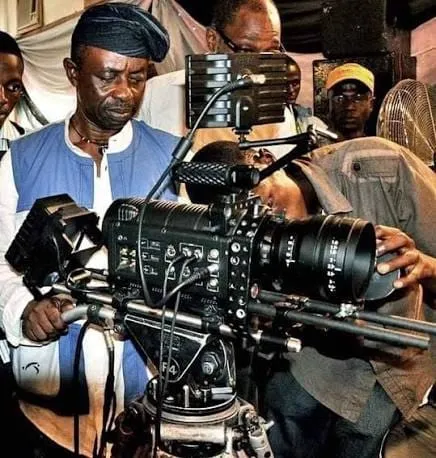
Veteran Nigerian filmmaker and cinematographer, Tunde Kelani, has spoken about his remarkable career, his passion for storytelling and his commitment to preserving Yoruba culture through film.
In an interview, Kelani reflected on his journey from photography and television to becoming one of Nigeria’s respected filmmakers.
He also discussed the influence of indigenous culture on his work, the growing role of artificial intelligence in filmmaking and his advice to young creatives.
A Journey Rooted in Culture
Kelani said his interest in filmmaking began at an early age, influenced partly by relatives who were already involved in the industry and by his upbringing in Abeokuta, Ogun State, a city he described as rich in culture and oral traditions.
He explained that learning to read and write in Yoruba opened the door to a deeper appreciation of his cultural heritage.
He was also exposed to English, allowing him to compare what he learnt in school with the knowledge and traditions he encountered within the Yoruba community.
His early interest eventually led him to photography and later to motion pictures. He joined Western United Television, where he received professional training as a film cameraman.
Kelani later attended the London Film School, where he studied both the artistic and technical aspects of filmmaking. After returning to Nigeria, he worked in television before becoming an independent filmmaker.
He said his exposure to the works of notable Nigerian artists and filmmakers, including Wole Soyinka, Hubert Ogunde and other pioneers, further strengthened his interest in cinema.
Preserving Yoruba Culture Through Film
According to Kelani, one of his major motivations for choosing cinema was the desire to promote, preserve and document Yoruba culture.
Although he has been influenced by cinemas from Hollywood, Japan, India, Italy and other parts of the world, he said his identity as a Yoruba filmmaker remains central to his work.
Kelani explained that every successful film industry tends to have a distinct cultural identity.
He noted that audiences can often recognise Indian, Japanese or South Korean films because of the cultural elements embedded in their storytelling.
For him, Yoruba culture plays a similar role.
He described himself primarily as a storyteller who uses cinema as a vehicle for communicating experiences, history and culture.
Indigenous Languages and Cultural Identity
Kelani said speaking and promoting indigenous languages is an important part of his identity and creative work.
He described himself as an advocate of indigenous cultural expression and argued that Nigeria’s cultural diversity should be better represented in the country’s film industry.
With hundreds of languages and numerous ethnic groups across Nigeria, he believes filmmakers have a responsibility to tell stories that reflect the country’s diverse cultures and traditions.
Literature as a Source of Inspiration
Kelani said many of his films have been adaptations of literary works, reflecting his long-standing love for reading.
His childhood experiences played an important role in developing that passion. Although he was born in Lagos, his father arranged for him to grow up in Abeokuta.
Kelani recalled that he initially felt lonely after being separated from his mother, but reading soon became a source of comfort and an escape.
That early relationship with literature eventually influenced his filmmaking approach, particularly his preference for adapting written works for the screen.
Some of his films, including Saworoide, Arugba and Campus Queen, explore social and political issues, while other works have been adapted from the writings of prominent Nigerian authors.
Why ‘Cordelia’ Is Special to Him
Asked to identify his favourite film among his works, Kelani singled out his latest project, Cordelia.
The film is adapted from Femi Osofisan’s novel of the same name, a project Kelani said he had considered for many years.
He revealed that he had initially planned to produce Cordelia before Maami, which was released in 2012.
However, circumstances surrounding the project led to the production of Maami first.
Kelani said his renewed interest in Cordelia was partly connected to a collaboration involving the University of Delaware in the United States.
According to him, the university’s music department was interested in a cultural fusion project and proposed developing and orchestrating music for a film soundtrack.
Kelani presented Cordelia as a suitable project because he believed its dramatic storyline could inspire a powerful musical composition.
Embracing New Technology
Kelani said he does not see a conflict between traditional filmmaking and modern technology.
He explained that he has worked with different generations of filmmaking technology and continues to experiment with new tools.
He recently completed an experiment at a small studio he described as a “Studio Lab”, where he combined various filmmaking techniques, including physical sets, green screens, traditional props, digital cinema cameras and artificial intelligence.
For Kelani, technological advancement is inevitable, and filmmakers should learn how to use new tools rather than resist them.
AI Must Not Replace Culture
On artificial intelligence, Kelani said he sees the technology as another important tool in filmmaking.
He explained that technological developments have always transformed motion-picture production, just as computers, sound systems, graphics technology and digital cameras did in previous generations.
However, he warned that technology must remain under the control of filmmakers and should not replace cultural identity.
According to him, filmmakers should embrace artificial intelligence while ensuring that their languages, cultures and stories remain at the centre of their work.
He noted that filmmaking is a collaborative process involving people from different backgrounds, making technology useful for coordinating and producing complex projects.
The Business Side of Nigerian Cinema
Kelani also discussed the challenges facing filmmakers who want to preserve Nigerian cultures through cinema.
He said many of the people who finance films are primarily interested in the commercial side of the industry.
Their main concerns are investment, profitability and recovering their money.
As a result, filmmakers may sometimes struggle to produce culturally focused projects if investors believe such films may not generate sufficient returns.
Kelani acknowledged that audience preferences are also changing rapidly as technology continues to transform how people consume entertainment.
Recognition Was Never His Motivation
Reflecting on the recent recognition he received from the Nigerian Academy of Letters, Kelani said awards were never the reason he entered filmmaking.
He explained that his primary motivation had always been his passion for creating, communicating and telling stories.
From photography and cinematography to advertising, music and filmmaking, he said he remained focused on finding ways to express his ideas and connect with audiences.
While he appreciates recognition, Kelani said he never began his career expecting to receive awards years later.
He advised creatives to concentrate on their work and allow recognition to come naturally rather than making fame their primary objective.
Advice to Young Filmmakers
Kelani’s message to young filmmakers is simple: passion should come first.
He said creative careers can be challenging, requiring perseverance through disappointments, financial difficulties and changing circumstances.
Kelani also noted that filmmakers do not necessarily have to become stars or appear in front of the camera.
He has spent much of his career behind the camera, focusing on helping stories reach audiences effectively.
He urged young filmmakers to take time to learn their craft, understand the filmmaking process and develop their individual voices rather than rushing to become famous.
He also encouraged them to embrace continuous learning because technology, production methods and audience habits are constantly evolving.
According to him, filmmaking offers numerous career paths, including cinematography, directing, writing, editing, sound design and production design.
For Kelani, the most important thing is commitment to the work.
He believes fame and recognition should remain secondary because when a creative person combines passion, discipline and a genuine story to tell, the quality of the work will eventually speak for itself.
Join us on our WhatsApp Platform @KOIKIMEDIA NEWS YOUR PAGE
Koikimedia Bringing the World 🌎 Closer to Your Doorstep

[mc4wp_form id=2402]