Physical Address
304 North Cardinal St.
Dorchester Center, MA 02124
Physical Address
304 North Cardinal St.
Dorchester Center, MA 02124

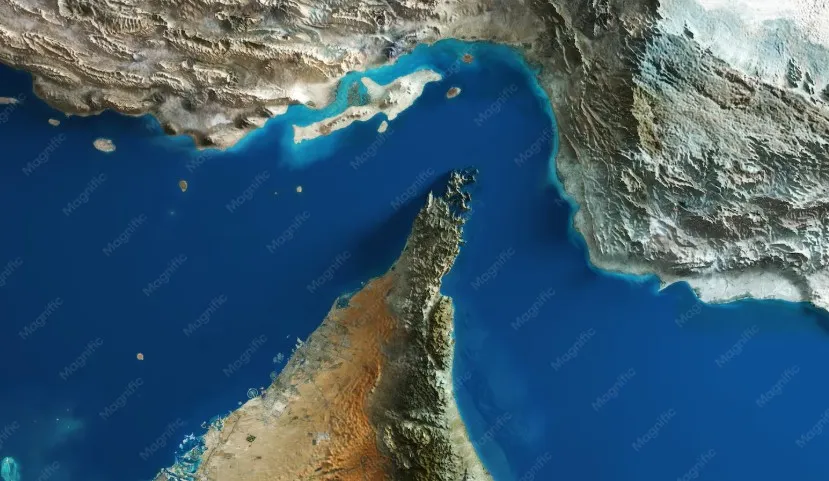
The United States has warned that disruptions to shipping through the Strait of Hormuz could worsen food insecurity in Nigeria and other sub-Saharan African countries as fertilizer shortages and rising fuel costs threaten agricultural production.
The warning was issued by Amb. Jennifer Locetta, Alternative Representative for Special Political Affairs at the US Mission to the United Nations, during a UN Security Council Open Debate on Food Insecurity in New York.
Locetta said attacks and disruptions attributed to Iran in the Strait were affecting the movement of commodities through a waterway that carries a significant share of the world’s oil and fertilizer supplies.
“We are outraged that the Iranian regime continues its egregious and unconscionable efforts to disrupt freedom of navigation in the Strait of Hormuz,” she said.
According to the US envoy, the crisis could have serious consequences for food production in sub-Saharan Africa, South Asia and parts of Southeast Asia because fertilizers transported through the Strait are critical to agricultural activities in those regions.
She said reduced access to fertilizer could lead to lower agricultural output, higher food prices and worsening hunger in countries such as Nigeria, Sudan and the Democratic Republic of Congo.
“The projected loss in agricultural outputs in the coming months mean less food, higher prices, and more hunger in places like Sudan, Nigeria, and the DRC,” Locetta said.
The Strait of Hormuz, which connects the Persian Gulf to the Indian Ocean, reportedly handles about 20 per cent of global oil supplies and nearly 33 per cent of global fertilizer shipments.
Locetta also said rising fuel prices linked to the disruption were already increasing the cost of humanitarian operations.
She warned that price increases in conflict-affected areas, including Syria and Gaza, could undermine food security gains achieved by humanitarian organisations and the communities they support.
The World Food Programme, she said, had projected that the crisis could leave an additional 45 million people facing acute food insecurity globally.
Locetta also cited the Famine Early Warning Systems Network, saying more than 16 million people in the Democratic Republic of Congo require food assistance.
She said armed groups were blocking humanitarian routes in the country, while an Ebola outbreak posed an additional threat to millions of people.
On Sudan, the US envoy accused parties to the conflict of using food access and availability as a weapon of war and called for rapid, safe and unhindered humanitarian access across the country.
She further warned that natural events such as El Niño could push tens of millions of people into acute hunger.
Locetta said the United States remained committed to combating hunger under UN Security Council Resolution 2417, adopted in 2018.
She disclosed that Washington had recently committed more than $1 billion in assistance to UNICEF and the World Food Programme to support humanitarian, nutrition and food security programmes.
She added that the US was “actively pursuing options to respond to fertilizer shortages.”
“The United States will not abandon the needy or leave them to suffer hunger, whether the result of conflicts or natural disasters,” she said.
The warning comes amid concerns that escalating Iran-Israel tensions and disruptions to shipping in the Middle East could deepen the global food crisis into 2027.
Nigeria is considered particularly vulnerable because of its dependence on imported agricultural inputs. An estimated 70 per cent of the country’s fertilizer and other key farm inputs are sourced from outside the country.
The development could further worsen Nigeria’s food crisis, with farmers already facing insecurity, high transportation costs, flooding and the impact of the removal of fuel subsidy in 2023.
Data from the National Bureau of Statistics showed that food inflation stood at 22.22 per cent in July 2026.
The UN’s Cadre Harmonisé report also projected that more than 31 million Nigerians could face acute food insecurity between June and August 2026 if urgent measures are not taken.
The World Food Programme and the Food and Agriculture Organisation have similarly warned that fertilizer shortages and high diesel costs are forcing some Nigerian smallholder farmers to reduce cultivation or adopt crops requiring fewer inputs.
The trend could further threaten food production during the 2026/2027 farming season.
Join us on our WhatsApp Platform @KOIKIMEDIA NEWS YOUR PAGE
koikimedia Bringing the World 🌎 Closer to Your Doorstep

[mc4wp_form id=2402]