Physical Address
304 North Cardinal St.
Dorchester Center, MA 02124
Physical Address
304 North Cardinal St.
Dorchester Center, MA 02124

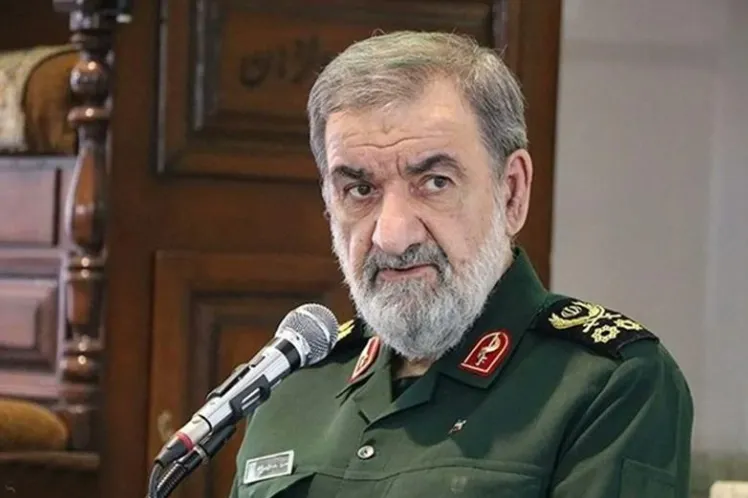
The Islamic Republic of Iran has warned that it will stop all oil exports from the Persian Gulf and through the strategic Strait of Hormuz if the United States continues its economic pressure campaign against Tehran.
The warning was issued by Iran’s Secretary of the Supreme National Security Council, Dr Mohsen Rezaee, in a statement posted on his official X account on Sunday and during an interview broadcast by Iran’s state television, IRIB.
“If the economic war continues, not a single drop of oil will be exported, neither through the Strait of Hormuz nor from anywhere in the Persian Gulf,” Rezaee said.
He further warned that Iran would consider any country that supports or participates in the US economic campaign against Tehran to be engaged in an act of war.
“If the countries surrounding Iran join the Americans in the economic war, not a single drop of oil will leave the Persian Gulf and the Strait of Hormuz, and we will also target other routes through which oil is exported from the Persian Gulf,” he said.
Rezaee also threatened retaliation against regional countries and maritime transit points that cooperate with Washington or facilitate alternative routes intended to bypass Iranian-controlled waters.
“If US President Donald Trump wants to do something, we will retaliate in a seismic manner,” Rezaee added.
The warning came days after US Treasury Secretary Scott Bessent called on Washington’s allies and trading partners to isolate Tehran economically.
Bessent said the United States was preparing what he described as “the greatest coordinated economic isolation in the history of the world”, urging third-party countries to stop energy purchases and financial transactions involving Iranian entities.
The development has heightened concerns over global energy supplies and maritime security, given the strategic importance of the Strait of Hormuz, which lies between Iran and Oman.
The waterway is one of the world’s most important oil transit routes, with a significant share of global petroleum and liquefied natural gas shipments passing through it from major Middle Eastern producers, including Saudi Arabia, Iraq, the United Arab Emirates, Kuwait and Qatar.
Iran has repeatedly threatened to close the strait during previous confrontations with the United States and its regional allies.
However, Rezaee’s latest warning that countries supporting US sanctions could be treated as participants in an “act of war”, coupled with threats against alternative oil routes and export terminals, has raised fresh concerns over shipping and energy security.
The escalation followed US President Donald Trump’s announcement of what he called the “most crushing economic operation against Iran”, describing it as an “Economic D-Day” and urging US allies to “stand with the United States of America to isolate and defeat the Iran threat.”
Trump’s announcement came after a 60-day period for negotiations with Tehran expired without a breakthrough. The US president subsequently declared that the talks had ended.
Earlier on Wednesday, the United Arab Emirates suspended economic ties with Iran after two ballistic missiles were fired towards its territory. Tehran denied responsibility and accused Israel of carrying out a “false-flag operation”.
Iran had effectively closed the Strait of Hormuz after the United States and Israel launched a joint bombing campaign against the Islamic Republic on February 28. The US Navy later imposed a blockade on Iranian ports and began guiding ships through routes Tehran considers illegal.
Nearly 200 ships reportedly navigated the strait last week, compared with 150 the previous week and about 40 two weeks earlier. The traffic remains around 20 per cent of pre-war levels, according to the UK Maritime Trade Operations Center.
Data from Kpler also showed that more than 80 per cent of liquid cargo vessels crossing the strait over the past two weeks either used a US-backed route through Omani waters, which Iran considers illegal, or switched off their tracking systems, possibly to use the same corridor.
Five vessels were reportedly struck by Iranian projectiles during the past week, leaving two people dead or injured. The ships were damaged but none was reported lost.
Join us on our WhatsApp Platform @KOIKIMEDIA NEWS YOUR PAGE
koikimedia Bringing the World 🌎 Closer to Your Doorstep

[mc4wp_form id=2402]