Physical Address
304 North Cardinal St.
Dorchester Center, MA 02124
Physical Address
304 North Cardinal St.
Dorchester Center, MA 02124

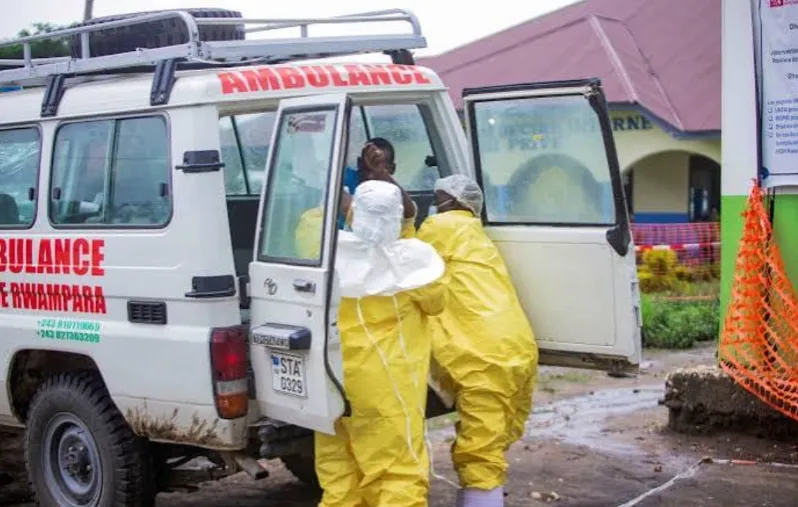
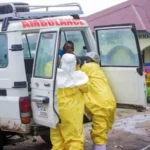
The Ebola outbreak in the Democratic Republic of the Congo (DRC) has recorded 5,515 confirmed cases and 2,642 deaths, making it the deadliest Ebola outbreak in the country’s history.
Government figures released on Sunday showed that 51 new cases were recorded in the eastern provinces of Ituri and North Kivu.
The outbreak was declared in mid-May and has since become a major international health concern.
The case fatality rate has risen sharply from around 20 percent in early June to nearly 48 percent, meaning that almost one in every two people infected with the virus is now dying.
However, health authorities have improved contact tracing, with coverage rising from about 30 percent in June to more than 85 percent.
The outbreak has also taken a heavy toll on healthcare workers. According to the World Health Organization (WHO), about 160 health workers have been infected, while approximately 45 have died.
Efforts to control the disease have been complicated by armed conflict, population displacement, attacks on healthcare workers and facilities, population movement and inadequate infrastructure in affected areas.
Vaccines Arrive in DRC
The outbreak involves the Bundibugyo strain of Ebola, for which there is currently no specifically approved vaccine or treatment.
The strain is less common than the Ebola virus responsible for most previous outbreaks.
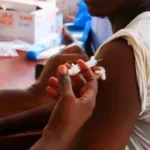
The WHO has committed 70,000 doses of the Ervebo Ebola vaccine, which has been successfully used during previous outbreaks. Although it is not specifically licensed for the Bundibugyo strain, early animal studies suggest it could provide some protection.
About 16,250 doses arrived in the DRC on Friday as authorities stepped up efforts to contain the outbreak.
WHO Director-General Tedros Adhanom Ghebreyesus and other health officials have called for the international response to be increased two to three times to ensure that affected communities receive adequate medical support.
They also urged greater protection for frontline health workers, including protective equipment, timely salaries, rapid diagnosis and quality medical care for those who become infected.
Public health consultant Abdulsalami Nasidi, who helped establish the Africa Centres for Disease Control and Prevention, warned that the situation was becoming increasingly difficult to control.
He attributed the continued spread partly to weak infection-control measures and a lack of trust between authorities and affected communities.
Despite the rising number of cases, the WHO said transmission has been interrupted in Uganda and in several health zones in Ituri and South Kivu.
The organisation said these successes demonstrate that early detection, strong leadership and cooperation from local communities can help stop the spread of Ebola.
At the Vatican on Sunday, Pope Leo prayed for the people of the DRC and expressed concern over the growing Ebola outbreak.
He called on the international community to take urgent action and involve local communities in prevention efforts to save as many lives as possible.
The WHO currently considers the risk to the global population to be low, although the risk within the DRC remains very high.
Join us on our WhatsApp Platform @KOIKIMEDIA NEWS YOUR PAGE
koikimedia Bringing the World 🌎 Closer to Your Doorstep

[mc4wp_form id=2402]