

By Mathins Owoseni
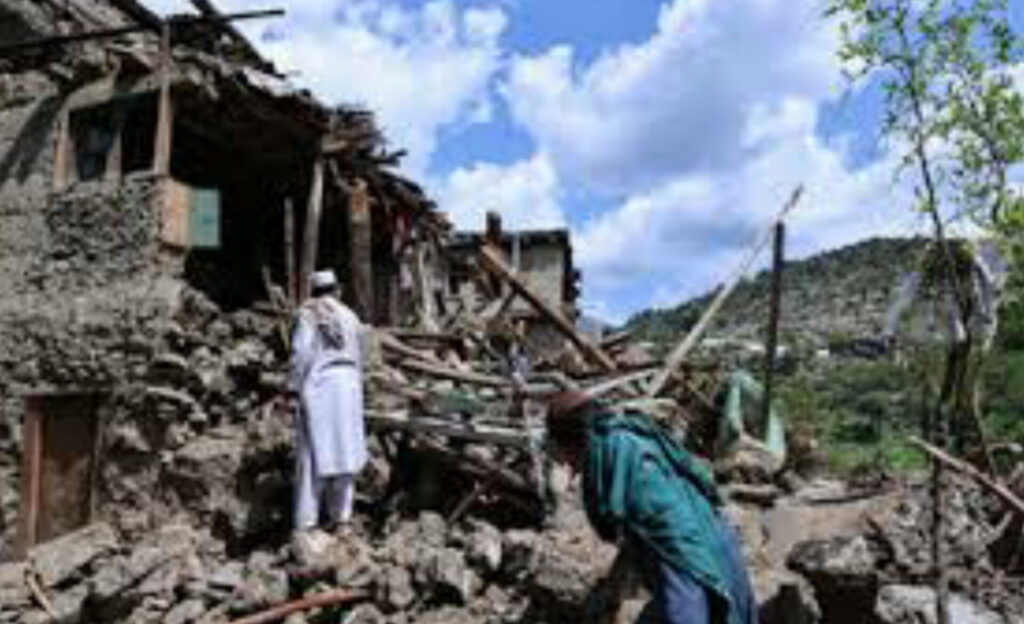
A powerful earthquake struck northern Afghanistan, killing at least 20 people and injuring over 534, authorities said Monday.
The 6.3-magnitude quake hit overnight, with its epicenter near Mazar-i-Sharif, a major city in the region. Health ministry spokesman Sharafat Zaman reported that fatalities and injuries were being treated in Samangan and Balkh provinces. Residents of Mazar-i-Sharif were seen rushing into the streets in panic.
The city’s famous Blue Mosque, a 15th-century landmark known for its vibrant tiles, was also damaged in the earthquake.
Parts of the structure, particularly from one of its minarets, broke off and were scattered across the mosque’s grounds, one of the country’s few remaining tourist spots.
Correspondents in the capital Kabul, around 420 kilometres south by road, also reported feeling the shaking.
Afghanistan’s poor communication networks and infrastructure in mountainous areas have often hindered disaster response efforts, preventing authorities from reaching remote villages to assess damage for hours or even days.
The defence ministry said it had cleared and reopened the main road between Mazar-i-Sharif and the town of Kholm, and had rescued people stranded there overnight, resulting in ‘significant material losses’.
“Many homes have been destroyed, and there’s been a lot of damage to property,” Hamdullah Fitrat, a Taliban spokesperson, said on social media, though he didn’t give exact numbers.
This disaster is the latest challenge for the Taliban government, which has faced three big earthquakes since taking over in 2021. Foreign aid, crucial to Afghanistan’s economy, has dropped significantly. In August, a 6.0-magnitude quake killed over 2,200 people and caused $183 million in damage, according to the World Bank.
Afghanistan is prone to earthquakes, especially along the Hindu Kush mountain range, where the Eurasian and Indian tectonic plates meet.
Recent significant tremors include the 2023 quake in western Herat, near the Iranian border, and the 2022 quake in eastern Nangarhar province, which collectively killed hundreds and destroyed thousands of homes. The country’s predominantly rural areas, already devastated by decades of war, have many poorly constructed homes, exacerbating the impact of these disasters.
Afghanistan is currently facing a severe humanitarian crisis, compounded by drought, economic restrictions on the banking sector, and the forced return of millions of Afghan citizens from neighboring Iran and Pakistan.
The United Nations and aid agencies have warned that hunger is rising, adding to the country’s dire situation.
Join us on WhatsApp Platform @KOIKIMEDIA NEWS YOUR
KoikiMedia Bringing the World 🌎 Closer to Your Doorstep