

The House had earlier approved a version of the bill by just one vote. Trump had urged Congress to deliver the final version to him by July 4.
By Titilope Adako
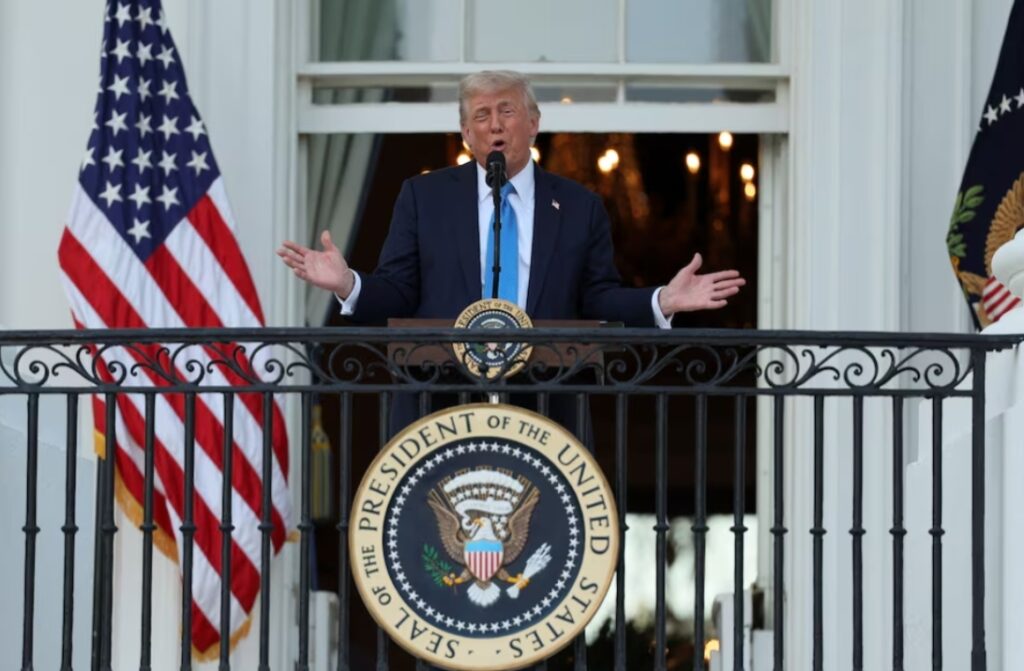
Republicans in the United States Senate have narrowly passed Donald Trump’s sweeping tax and spending legislation, dubbed the One Big Beautiful Bill Act, with Vice-President JD Vance casting the tie-breaking vote after a marathon 24-hour debate.
The bill now returns to the House of Representatives, where it still faces stiff resistance.
The House had earlier approved a version of the bill by just one vote. Trump had urged Congress to deliver the final version to him by July 4.
Announcing the result, Vance declared, “The bill as amended is passed,” drawing applause from Republicans while Democrats sat in silence, visibly frustrated.
The bill seeks to make permanent Trump-era tax cuts and offset the loss of revenue with deep cuts to welfare programmes, including food aid and Medicaid.
These proposals sparked significant debate and division within both parties.
Senate Majority Leader John Thune managed to rally most Republicans but lost three key votes—Susan Collins (Maine), Thom Tillis (North Carolina), and Rand Paul (Kentucky)—who joined all Democrats in opposing the bill.
Support from Senator Lisa Murkowski of Alaska proved pivotal. She had initially withheld support over cuts to Medicaid affecting her state but ultimately voted in favour, calling the process “rushed” and the 24-hour debate “probably the most difficult and agonising” of her legislative career.
“My hope is that the House is going to look at this and recognise that we’re not there yet,” Murkowski told reporters.
Trump, speaking from a migrant detention centre in Florida, celebrated the Senate victory: “It’s a great bill. There is something for everyone.”
However, dissent continues to grow. The House Freedom Caucus criticised the bill’s projected $650 billion annual addition to the deficit, calling it “not fiscal responsibility.” Meanwhile, moderate Republicans are worried about deeper-than-expected Medicaid cuts.
Prominent among the bill’s critics is tech billionaire Elon Musk. Once a staunch Trump ally and appointed cost-cutting czar, Musk has turned against the bill over its slashing of support for green energy and electric vehicles.
He has threatened to fund primary challengers to Republican lawmakers who support it and even hinted at forming a new political party.
“Every member of Congress who campaigned on reducing government spending and then immediately voted for the biggest debt increase in history should hang their head in shame!” Musk posted on X.
Democrats fought the bill with procedural delays, forcing Senate clerks to read the entire 940-page document aloud and launching a lengthy amendment process dubbed a “vote-a-rama.”
House Republicans are now under pressure to finalise the bill before Trump’s self-imposed deadline of July 4, though the former president has admitted that timeline may be missed.
With deep divisions in both chambers and razor-thin margins, the fate of Trump’s defining second-term bill remains uncertain.
Join us on our WhatsApp Platform @KOIKIMEDIA NEWS YOUR PAGE
KoikiMedia Bringing the World 🌎 Closer to Your Doorstep