Physical Address
304 North Cardinal St.
Dorchester Center, MA 02124
Physical Address
304 North Cardinal St.
Dorchester Center, MA 02124

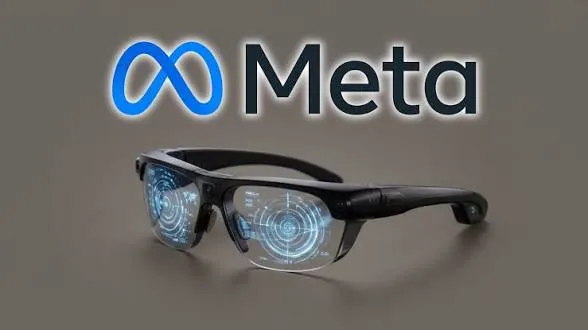
Meta has unveiled a new range of artificial intelligence-powered wearable devices, including camera-free smart glasses designed to address growing concerns over privacy and the unauthorised recording of people.
The company announced the new products on Wednesday during its annual Connect conference at its headquarters in Menlo Park, California.
Meta CEO Mark Zuckerberg also introduced the company’s new personal AI assistant, Muse.
Zuckerberg said nearly two billion people around the world currently wear glasses and predicted that many of them would eventually upgrade to AI-powered versions.
“We think that in the coming years, most of these are going to get upgraded to AI glasses,” he said.
Meta’s new audio-only glasses are scheduled to go on sale on October 13, starting at $349.
Unlike conventional smart glasses, the new version does not contain a camera, allowing users to listen to audio, make phone calls and interact with AI without recording images or videos.
The launch comes amid increasing concerns about the privacy implications of smart glasses equipped with miniature cameras, particularly the unauthorised filming of women and girls.
Smart glasses can perform several functions, including taking photographs, recording videos, playing music, making calls, translating text and interacting with AI assistants.
Meta said the audio-only model will complement several new smart-glasses models that retain photo and video capabilities.
The company has also emphasised privacy features, including a visible recording indicator light on camera-equipped glasses.
Meta Vice President of AI Product Vishal Shah said making the recording indicator clear to people was an important part of the company’s approach to privacy.
He said Meta had continued to make the indicator more noticeable since the first smart glasses were launched.
Meta introduced its first smart glasses in 2021 and later expanded its partnership with eyewear manufacturer EssilorLuxottica, which produces Ray-Ban and Oakley Meta models.
The company also announced new versions of its Meta Ray-Ban glasses. Its display-equipped model, starting at $799, is expected to expand into markets including the United Kingdom, France, Italy, Germany and Canada.
Meta is also preparing to launch a new mixed-reality headset that is lighter than its earlier Quest virtual-reality devices.
The headset, known as Meta VR Glasses, uses an external battery and memory pack connected by a cable, reducing the weight of the glasses themselves.
Zuckerberg said the device weighs approximately as much as a deck of cards.
The headset has no external controls and instead relies on hand gestures and voice commands. Meta said it is scheduled to launch in spring 2027 at a starting price of $1,299.
Meta Expands AI Assistant
Meta is also investing heavily in Muse, its first consumer-facing agentic AI application designed to carry out tasks on behalf of users.
The company said users who connect their personal accounts, including finance, health and shopping services, will be able to ask Muse to perform tasks such as signing up for services, booking appointments and making phone calls.
Meta said the Muse application became the leading free app on both the Google Play Store and Apple App Store, surpassing OpenAI’s ChatGPT, Anthropic’s Claude and Google’s Gemini.
Zuckerberg also announced another device, the Muse Charm, which is expected to launch before the end of the year. Meta has not yet disclosed its price.
The small, puck-shaped device will feature a display and allow users to interact with their Muse AI assistant without relying on a smartphone.
Meta said several major companies, including Instacart, Shopify and Expedia, have announced partnerships to integrate their services with Muse.
Walmart, Best Buy, Gap and Sephora are also expected to work with the platform.
However, Meta faces increasing scrutiny over privacy and child-safety issues as it expands its AI and wearable technology business.
The company has also faced legal challenges in the United States and regulatory restrictions in other countries concerning children’s online safety and privacy.
Meta’s latest wearable announcements therefore come as the company seeks to expand AI-powered products while responding to growing concerns over privacy, safety and the use of artificial intelligence in consumers’ daily lives.
Join us on our WhatsApp Platform @KOIKIMEDIA NEWS YOUR PAGE
Koikimedia Bringing the World 🌎 Closer to Your Doorstep

[mc4wp_form id=2402]