Physical Address
304 North Cardinal St.
Dorchester Center, MA 02124
Physical Address
304 North Cardinal St.
Dorchester Center, MA 02124

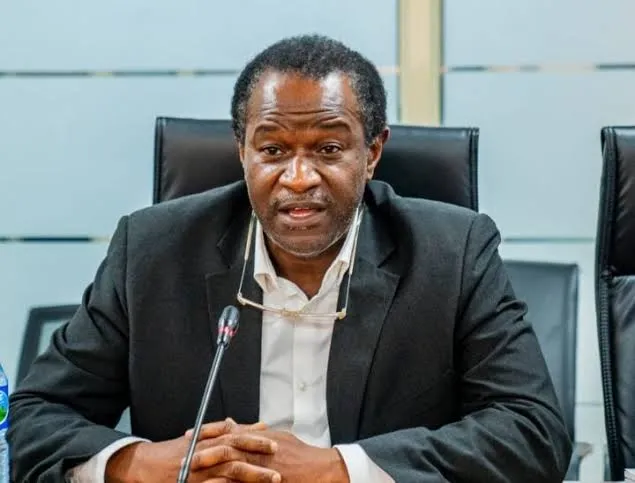
The Nigerian Education Loan Fund (NELFUND) has said it will not publish the names of students benefiting from its loan scheme, citing data protection concerns and the need to protect beneficiaries from public embarrassment and possible targeting.
The Director-General of NELFUND, Akintunde Sawyerr, said the fund would only disclose the institutions receiving payments and the number of beneficiaries, adding that the identities of individual students would remain confidential.
Sawyerr disclosed that NELFUND had disbursed N375.28bn in student loans as of November 9, 2026, since the launch of its loan portal on May 24, 2024.
The amount comprises N194.77bn paid as institutional fees and N180.50bn disbursed as upkeep allowances, with 1,675,474 student loans provided across 320 beneficiary institutions.
Speaking in an interview with The PUNCH, the NELFUND boss maintained that students who borrowed money to finance their education should not have their financial circumstances made public.
His position comes amid calls by education and finance experts for greater transparency and accountability in the administration of the scheme, particularly over concerns about its long-term sustainability and loan recovery arrangements ahead of the first repayment window in 2028.
Asked whether the fund would consider publishing beneficiaries’ names in response to demands for transparency, Sawyerr ruled out the possibility, citing privacy concerns.
He said, “No, certainly not. There are data protection issues. If you borrow money from an institution or you borrow money from me, you don’t want to see it on a notice board or to see it on television that you borrowed money from me.
“Some people are embarrassed by taking loans. Also, some people don’t want to be targeted, so we’re never going to publish the names of individual beneficiaries. We’ll tell you the schools that we paid; we can tell you the numbers, but the data protection laws prevent us from giving out the names of individuals who have taken loans.”
On whether the loans would attract interest in the future, Sawyerr said NELFUND had no immediate plans to introduce interest charges, insisting that Nigerian students deserved interest-free loans.
“At the moment, we have decided that we don’t want to have interest on the loans. When we consider it necessary to do that, we’ll have a discussion. It’s an interest-free loan. Nigerians deserve an interest-free loan,” he said.
He also rejected calls for the conversion of student loans into grants, arguing that beneficiaries at the tertiary education level were adults who understood the implications of borrowing and should be willing to repay after securing employment.
According to him, students take the loans to acquire qualifications that would enable them to earn a living, making repayment a reasonable expectation.
He said, “I understand that, at the end of the day, people only value things that they pay for, while just giving people money because it’s education, at the tertiary level.
“Most of the people we’re dealing with are adults, and these adults understand that they’re getting an education so they can make a living, and they’re quite happy to borrow in order to pay back.”
Addressing concerns about the sustainability of the scheme, Sawyerr said loan recovery was not the fund’s only source of financing, explaining that NELFUND could also generate revenue through investments, donations and statutory allocations.
He added that educating and empowering more young Nigerians would expand the country’s tax base, increase government revenue and provide additional resources for funding education.
“Recovery is very important for the funds, but it’s not our only source of sustaining the NELFUND. We have other sources. We’re able to raise funds. We’re able to invest the funds that we have. We’re able to receive donations.
“But I think, most importantly, if we get our students, our youth, educated and empowered, there will be a larger tax base, more money will be collected from the taxation system, and it will be used, given the approach of this government, to fund education further, including NELFUND,” he said.
The NELFUND director-general also disclosed that some beneficiaries had started repaying their loans, while several Nigerians had expressed interest in supporting the scheme by paying the fees of other students.
He maintained that the government needed to adopt a comprehensive approach to education financing rather than rely solely on loan repayments to sustain the fund.
On concerns about the absence of a clear statutory funding arrangement, Sawyerr said NELFUND was already covered under the development levy.
He explained that the fund receives 15 per cent of the four per cent development levy, which is shared among eligible beneficiaries.
“We are already provided for in the development levy. We get 15 per cent of the four per cent in the development levy. That’s an amount of money that is shared amongst those who are entitled to it, including NELFUND. That has already been provided for,” he said.
Meanwhile, Sawyerr explained that NELFUND’s recently introduced tokenisation system was designed to prevent double payments of tuition fees and give students greater control over the payment process.
He said the fund initially paid approved tuition fees directly into the accounts of beneficiary institutions, while separate payments were made to students for upkeep.
However, the arrangement sometimes resulted in double payments when students had already paid their tuition before NELFUND transferred the money to their institutions.
Some beneficiaries also encountered difficulties confirming whether their fees had been paid, particularly when they needed to meet examination deadlines and other academic requirements.
To address the challenges, the fund introduced a tokenisation system through which students receive electronic tokens on their phones and authorise payments directly to their respective institutions.
Sawyerr said the tokens could only be used to pay the institution where a beneficiary had secured admission, preventing the diversion of the funds to other purposes.
He said, “We decided to end that situation by using a token system where we send the electronic money to the student on an app, on their phone.
“They can now say, yes, I’m ready to pay my fees. They press the pay button, and it goes to one school only – the school they are attached to, or they’re admitted into. They cannot use that payment for anything else.
“But we put the control for the payment, the press pay button, in the hands of the students. And that’s what that tokenisation is about. It is to prevent or avoid double payments to the schools.”
On concerns over tuition fee increases by some institutions, Sawyerr said NELFUND would not finance fees considered excessive.
He disclosed that the fund had introduced a price dispute feature on its new portal, allowing students to challenge tuition charges before applying for loans.
According to him, complaints submitted through the feature would be forwarded to NELFUND for engagement with the affected institutions.
However, he clarified that the fund lacked the legal authority to penalise institutions over excessive fee increases, noting that its powers were limited to withdrawing financial support.
He identified the National Universities Commission, the National Board for Technical Education and the National Commission for Colleges of Education as the agencies responsible for regulating the institutions and taking appropriate disciplinary action.
He said, “No, we cannot penalise the schools because we don’t have the power. That is not within the law. We, as NELFUND, all we can do is say we’re not going to give money.
“So, we’ll just have to negotiate and make sure that the regulatory authorities like the National Universities Commission and National Board for Technical Education and the National Commission for Colleges of Education are the ones who can do that.”
Join us on our WhatsApp Platform @KOIKIMEDIA NEWS YOUR PAGE
Koikimedia Bringing the World 🌎 Closer to Your Doorstep

[mc4wp_form id=2402]