

A senior Israeli official, speaking anonymously during a briefing with U.S. journalists in Washington, revealed that assessments indicate remnants of enriched uranium may still lie beneath the damaged site one of three major Iranian nuclear facilities targeted during “Operation Midnight Hammer” on June 22
By Afolabi Ayodele
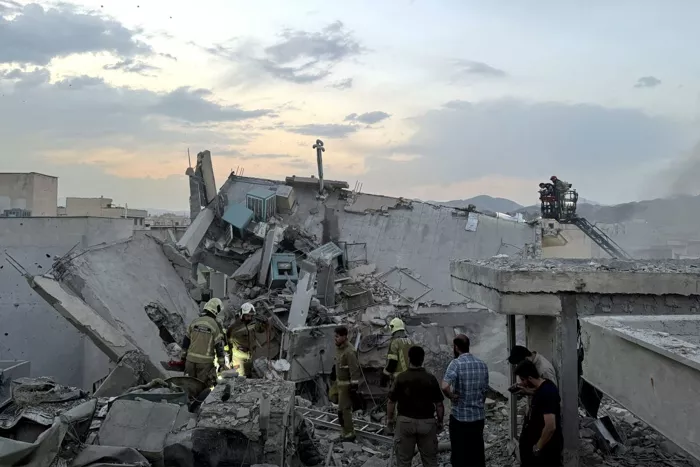
TEL AVIV/WASHINGTON — Israeli intelligence has issued a fresh warning that Iran might attempt to retrieve enriched uranium buried beneath the rubble of its Isfahan nuclear facility, which was struck during a U.S.-led military operation last month. Such a move, Israeli officials say, could spark renewed hostilities in the region.
A senior Israeli official, speaking anonymously during a briefing with U.S. journalists in Washington, revealed that assessments indicate remnants of enriched uranium may still lie beneath the damaged siteone of three major Iranian nuclear facilities targeted during “Operation Midnight Hammer” on June 22.
“Recovering that material would be incredibly challenging,” the official acknowledged, “but any effort by Tehran to reassemble its nuclear infrastructure will provoke a swift Israeli response. We will not stand by if Iran attempts to rebuild its nuclear capabilities.”
The White House has continued to project confidence about the outcome of the strikes. “As President Trump has repeatedly stated, Operation Midnight Hammer decisively dismantled Iran’s nuclear infrastructure,” said spokeswoman Anna Kelly. “Thanks to his bold leadership, the world is a safer place.”
However, that narrative has met some skepticism within the U.S. intelligence community. A leaked preliminary report from the Defense Intelligence Agency (DIA) suggests that while Iran’s key nuclear sitesFordo, Natanz, and Isfahan were heavily damaged, they were not entirely destroyed. Structural elements and underground sections reportedly survived the airstrikes.
CIA Director John Ratcliffe testified before Congress in late June that the assault had significantly delayed Iran’s ability to produce metallic uranium but stopped short of declaring a total dismantling of its nuclear program.
According to Israeli estimates, Iran’s nuclear efforts have been set back by at least two years. The Israeli official said any attempt to access buried uranium at Isfahan would likely be detected in time to take action.
International experts have also weighed in. Rafael Grossi, Director General of the International Atomic Energy Agency (IAEA), told CBS that although the sites were “substantially destroyed,” it would be premature to assume all nuclear assets were eliminated. “Let’s be honest—some remnants may still exist. Continuous inspection and vigilance are essential,” Grossi cautioned.
Tehran has consistently denied pursuing nuclear weapons, maintaining that its uranium enrichment is intended solely for peaceful energy development.
In an interview with U.S. commentator Tucker Carlson, Iranian President Mahmoud Pezeshkian admitted that the damaged sites are currently inaccessible. “We cannot even assess the extent of the destruction yet,” he said, citing ongoing cleanup efforts.
Analysts warn that although the attacks may have delayed Iran’s nuclear trajectory, any perceived attempt to rebuild or extract radioactive material could trigger a new crisis.
“We’re entering a critical window,” said one Western diplomat. “It remains to be seen whether the strikes achieved long-term deterrence or simply postponed a deeper confrontation.”
Join us on our WhatsApp Platform @KOIKIMEDIA NEWS YOUR PAGE
Koikimedia Bringing the World 🌏 Closer to Your Doorstep